
The $20 Accessory That Can Sideline a $20,000 Device
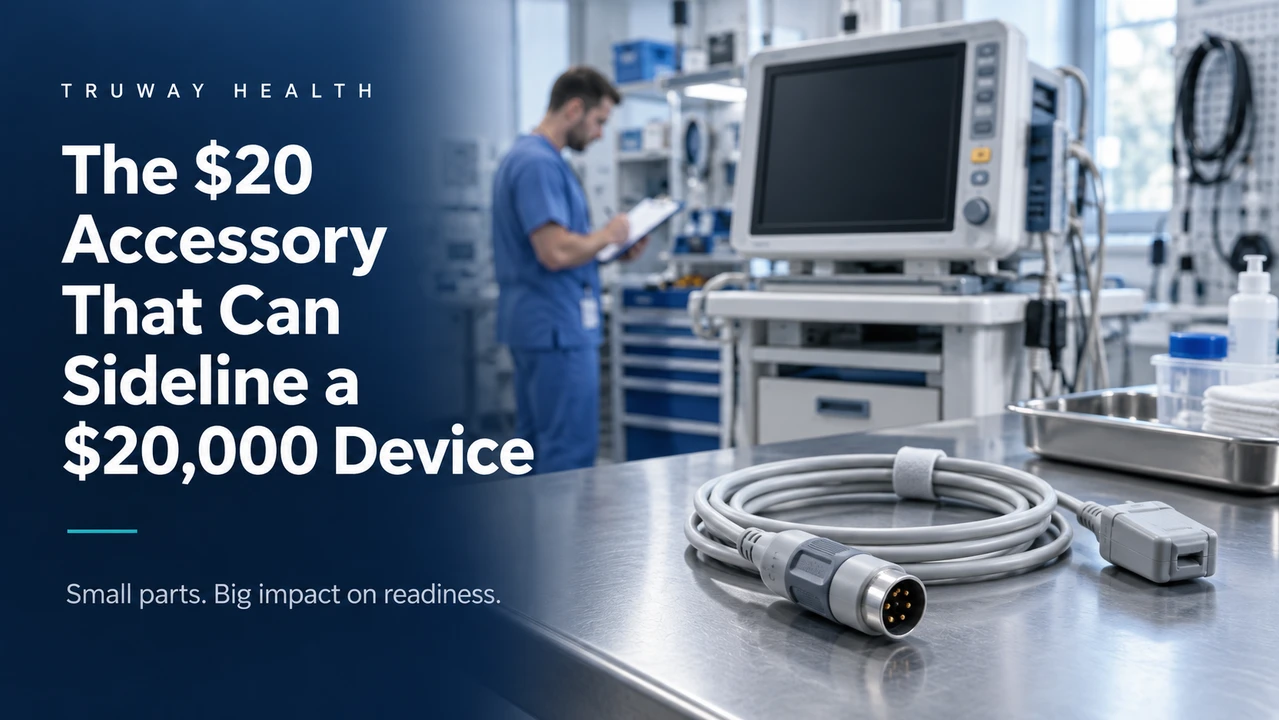
The equipment has arrived. The team has cleared space, scheduled training, and prepared to put the new device to work.
Then someone asks a simple question: “Where is the cable?”
The missing part may be inexpensive. Finding the correct replacement, confirming compatibility, and getting it delivered can still delay the entire installation.
The dollar amounts in this example are illustrative, but the purchasing question is concrete: Does the order include everything needed to make the equipment ready for its intended use?
A Delivered Device Is Only Part of the Purchase
Equipment quotes often draw attention to the main unit: its model, features, specifications, and price. Accessories may appear farther down the page, in a separate document, or under the phrase “optional extras.”
That leaves room for different assumptions.
A buyer might expect a sensor to be included because it appears in a product photo. A supplier might quote the base configuration because the required sensor was never specified. The clinical team might expect a mounting system that facilities personnel have not reviewed.
Before placing an order, turn those assumptions into a written list.
Separate what comes in the box from what must be purchased independently, what the facility already owns, and what still needs verification.
Small Parts Deserve Exact Descriptions
“Compatible cable” is not a complete purchasing specification.
For accessories that connect to a medical device, ask for the exact manufacturer and part number, the supported equipment models, and any applicable configuration or software limitations. Have the appropriate clinical engineering or technical team review the documentation.
A connector that appears to fit should prompt a compatibility check—not close the question.
The same discipline applies to probes, sensors, power supplies, batteries, mounting brackets, and other accessories. Resolve the requirements for the specific device and intended application before ordering.
Build an Equipment Readiness List
For each proposed purchase, use a short table that brings the whole configuration into view:
| Item to confirm | Question to resolve |
|---|---|
| Main unit | What exact model and configuration are being supplied? |
| Required accessories | Which components are needed for the intended application? |
| Included quantities | How many of each accessory are in the quoted package? |
| Recurring supplies | What must be replenished, and who will manage it? |
| Site requirements | What power, mounting, space, or network preparation is necessary? |
| Documentation | Are the relevant operating instructions and compatibility records available? |
| Installation and training | Who performs each step, and what does the quoted service cover? |
| Replacement support | How will the facility identify and obtain replacement parts? |
Have the supplier confirm the list in writing. Then have the people who will install, maintain, and use the equipment review the same configuration.
This creates a shared definition of what the purchase is supposed to deliver.
Compare the Cost of a Ready-to-Use Configuration
Consider two hypothetical quotes.
One has a lower base price but lists the mounting system, required accessories, installation, and training separately. The other includes those elements.
Comparing only the headline prices leaves the purchasing team with an incomplete picture.
Ask both suppliers to price the same defined configuration. Include freight, setup, required accessories, and any other known costs needed to reach readiness. Identify unresolved items explicitly instead of assigning them an assumed cost of zero.
A useful internal question is: What will we still need to buy or arrange after this shipment arrives?
Give Accessories a Home and an Owner
The next challenge begins after delivery.
A shared accessory may move between rooms. A spare may be stored somewhere only one person remembers. A replacement request may stall because nobody has the part number.
Consider maintaining an accessory record alongside the main equipment record. Capture the item description, part number, assigned location, quantity, and person or department responsible for replenishment.
Where backup stock is justified, choose quantities based on operational importance, replacement lead time, usage, and shelf-life or maintenance requirements.
The objective is to make availability visible and responsibility clear.
Test the Handoff Before Scheduling Use
Build a receiving and acceptance checkpoint into the purchasing plan.
Confirm the delivered items against the approved configuration. Route discrepancies to a named owner. Let qualified personnel complete the required installation, checks, and training before the equipment enters its intended service.
A signed delivery receipt confirms that a shipment arrived. Your readiness process should establish whether the facility can actually use what it purchased.
Ask One Better Question Before Approving the Quote
“What is the price?” is necessary.
“What does our team need to put this equipment into service?” makes that price meaningful.
At Truway Health, we encourage buyers to bring the complete application into the purchasing conversation: the device, its accessories, the facility requirements, and the people responsible for making it work.
Preparing an equipment request? Share your intended application, required configuration, and accessory list with Truway Health so those details can be addressed in the quotation.
Truway Health News & Insights

The Guidewire Is Not a Commodity: The Hidden Safety Architecture of Coronary Care
How precision engineering, clinical intelligence, and medical-device traceability are redefining exp...

Truth Social Suspends @truwayhealth Without Explanation: Truway Health Challenges Digital Censorship and Demands Accountability
October 9, 2026 | Truway Health News & Insights NEW YORK, NY — Truway Health, Inc. is formally chall...

The Stethoscope Standard: Rethinking the Value of U.S. M1 Through Medical Productive Capacity
Money ultimately derives much of its usefulness from confidence: confidence that a dollar can be exc...

Simple Steps for Seniors to Embrace Healthy and Joyful Living
For seniors seeking holistic wellness, healthy aging can feel harder than it should: the body change...

Healthcare Procurement Readiness: Building a More Resilient Clinical Supply Chain
Healthcare supply chains are often judged by a simple question: Did the product arrive? But for hosp...

Pass-Through Chambers and Material Flow in Controlled Healthcare Environments
Controlled healthcare environments depend on more than clean surfaces and filtered air. The way mate...