
The 72-Hour Warning Window: What Biomarkers Can Tell Us About Clinical Deterioration
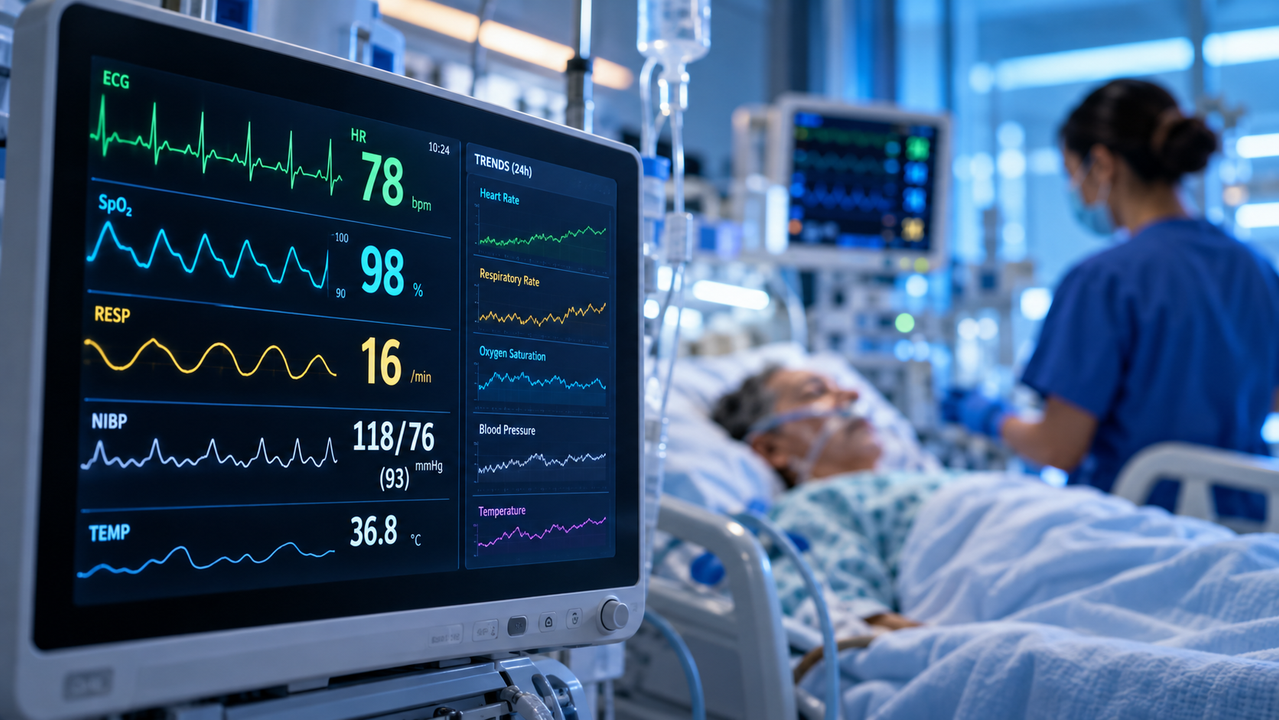
Introduction: Can the Human Body Signal an Emergency Before It Happens?
What if healthcare professionals could recognize the warning signs of serious clinical deterioration hours—or potentially days—before a patient experiences a life-threatening complication?
Across hospitals, intensive care units, emergency departments, and research institutions, this question is reshaping the way investigators approach patient monitoring.
Traditional medicine often relies on individual measurements: a blood pressure reading, an oxygen saturation level, a laboratory result, or a clinician's examination at a particular moment.
However, human physiology is constantly changing.
Heart rate fluctuates. Respiratory patterns evolve. Inflammatory responses intensify or resolve. Kidney function may deteriorate. Oxygen requirements can increase.
When these changes are examined collectively and over time, they may reveal patterns that are more informative than a single measurement.
This is the scientific rationale behind early warning systems, multimodal biomarkers, and temporal clinical prediction models.
The emerging goal is not simply to recognize when a patient becomes critically ill. It is to identify meaningful changes early enough for healthcare professionals to reassess the patient and consider appropriate intervention.
1. Understanding the 72-Hour Warning Window
The term 72-hour warning window describes a research and monitoring horizon during which physiological information may be evaluated for signs of subsequent clinical deterioration.
Importantly, this does not mean clinicians can reliably predict every critical event three days in advance.
Prediction accuracy varies according to the clinical condition, patient population, available measurements, and time remaining before an event.
A systematic scoping review of machine-learning early warning systems identified prediction horizons ranging from approximately 30 minutes to 72 hours. Some studies also reported reduced predictive performance as the forecast horizon increased.
This highlights a fundamental challenge: the earlier a system attempts to predict deterioration, the harder it can be to distinguish meaningful warning signs from ordinary physiological variation.
For clinical researchers, the 72-hour horizon presents an opportunity to investigate three interconnected questions:
-
Can subtle changes be detected before conventional warning thresholds are reached?
-
Which combinations of physiological measurements and laboratory biomarkers provide meaningful information about future risk?
-
Can earlier recognition lead to better clinical decisions and improved patient outcomes?
The challenge is to transform biological observations into reliable, clinically useful information rather than generating additional alarms without clear benefit.
2. The Biomarkers That May Signal Clinical Deterioration
A biomarker is a measurable biological characteristic that can provide information about normal physiology, disease processes, or responses to treatment.
In deterioration research, investigators study both traditional laboratory biomarkers and continuously or intermittently measured physiological variables.
Cardiovascular signals: Heart rate and blood pressure
Heart rate and blood pressure are among the most familiar clinical measurements.
A persistent increase in heart rate may accompany infection, pain, dehydration, bleeding, medication effects, or cardiovascular stress.
Falling blood pressure may indicate circulatory instability, although its significance depends on the patient's clinical circumstances.
Researchers are particularly interested in whether changes over time, considered alongside other observations, can provide useful advance warning.
Heart rate variability is another area of investigation, but its predictive significance depends heavily on measurement quality, context, and the patient population.
Respiratory signals: Oxygen saturation and breathing patterns
Changes in respiratory physiology can be particularly important.
Relevant measurements include:
-
Respiratory rate
-
Peripheral oxygen saturation (SpO₂)
-
Supplemental oxygen requirements
-
Changes in breathing patterns
-
Blood gas measurements, when clinically indicated
A rising respiratory rate or increasing oxygen requirement may warrant clinical reassessment, even when other measurements appear relatively stable.
Inflammatory biomarkers: CRP and procalcitonin
C-reactive protein (CRP) and procalcitonin are frequently studied in infection and inflammatory conditions.
However, neither marker independently establishes that a patient will experience severe deterioration.
Their concentrations can be influenced by multiple clinical factors, and a rising value must be interpreted in context.
Recent evidence reviews have found that commonly used biomarkers do not consistently predict adverse outcomes in suspected sepsis when used alone.
Metabolic biomarkers: Lactate
Lactate measurements can provide information relevant to metabolic stress and impaired tissue perfusion in some clinical circumstances.
An elevated lactate concentration can prompt further assessment, but it is not specific to one disease or mechanism.
Serial measurements may help clinicians evaluate changes in a patient's condition when used appropriately.
Kidney function and organ stress
Creatinine, urine output, electrolyte measurements, and other organ-function indicators may also contribute to deterioration assessments.
A change in kidney function, for example, may be important when considered with blood pressure, fluid balance, medication exposure, and other clinical observations.
The central principle is that no single biomarker tells the entire story.
3. From Isolated Measurements to Multimodal Intelligence
Traditional assessment often emphasizes whether an individual result falls inside or outside a reference range.
Multimodal monitoring asks a different question:
What happens when several physiological systems begin changing together?
Consider a hypothetical hospitalized patient whose measurements evolve over several hours.
The patient develops a gradually increasing respiratory rate, a higher resting heart rate, a modest rise in oxygen requirements, and changes in kidney-function measurements.
Each finding may have several possible explanations.
Together, however, the pattern could justify closer assessment.
This is where multimodal research becomes particularly valuable.
Investigators may combine:
-
Vital signs and oxygen requirements.
-
Laboratory biomarkers and organ-function measurements.
-
Medication and treatment information.
-
Demographic and clinical history.
-
Time-stamped changes in the electronic health record.
-
Clinician observations and documented concerns.
The objective is to determine whether combinations of information can improve the recognition of patients at risk.
Importantly, statistical correlations must be distinguished from causal relationships. A rising biomarker may accompany deterioration without causing it, and an association observed in one population may not apply to another.
4. Why Time Matters: The Science of Clinical Trajectories
One of the most promising developments in clinical monitoring is the study of physiological trajectories.
A single observation represents a moment.
A sequence of observations can reveal direction, rate of change, persistence, and recovery.
For example, a heart rate of 105 beats per minute may carry different clinical implications depending on whether it represents a stable baseline, improvement from a much higher rate, or a sustained increase from previous measurements.
The same principle applies to respiratory rate, blood pressure, oxygen requirements, and laboratory results.
Temporal models can investigate several dimensions:
Velocity: How quickly is a physiological variable changing?
Acceleration: Is the rate of change itself increasing?
Persistence: Does an abnormality resolve, fluctuate, or continue?
Interaction: Are multiple physiological systems changing simultaneously?
Recovery: Does the patient return toward a previous baseline following treatment?
Researchers are also exploring how to distinguish measurement artifacts, temporary physiological responses, and clinically meaningful trajectories.
The timing and frequency of measurements matter. Missing observations, irregular laboratory testing, and treatment-related changes can influence predictions and introduce bias.
A reliable forecasting system must account for these limitations.
5. Artificial Intelligence and the Future of Early Warning Systems
Artificial intelligence and machine learning offer potential methods for analyzing large amounts of longitudinal clinical information.
Rather than examining each measurement independently, algorithms can identify statistical relationships across combinations of variables.
Potential applications include:
-
Estimating the risk of unplanned intensive care transfer.
-
Identifying patterns associated with cardiac arrest.
-
Supporting surveillance for suspected sepsis.
-
Detecting evolving respiratory or circulatory instability.
-
Helping clinicians prioritize patients who may need reassessment.
However, predictive algorithms are not equivalent to clinical diagnoses.
A model may classify patients into higher- or lower-risk categories without determining the underlying medical cause.
Its usefulness depends on the quality of the data, external validation, calibration, and the clinical response to its output.
False-positive warnings can contribute to alarm fatigue and unnecessary interventions. False-negative results may create inappropriate reassurance.
Model performance can also change when algorithms are introduced into different hospitals, populations, or care environments.
The most important question is not simply whether artificial intelligence can generate a risk score.
It is whether the entire system—including human assessment, communication, and intervention—improves clinical care.
6. What Established Early Warning Systems Already Tell Us
The National Early Warning Score 2 (NEWS2), developed by the Royal College of Physicians, provides a standardized framework for identifying and responding to acute illness.
It considers six physiological parameters:
-
Respiratory rate
-
Oxygen saturation
-
Systolic blood pressure
-
Pulse rate
-
Level of consciousness or new confusion
-
Body temperature
Supplemental oxygen use is also incorporated into scoring.
NEWS2 illustrates how multiple observations can be combined to support escalation decisions.
Evidence reviews indicate that early warning scores can provide useful short-term risk stratification.
Nevertheless, prediction performance differs across clinical settings, and evidence that implementation consistently improves patient outcomes remains less certain.
These systems are designed to complement, not replace, professional assessment.
An individual patient's symptoms, clinical history, examination findings, and clinician or family concerns can warrant action regardless of a calculated score.
7. Can a 72-Hour Forecast Become a Clinical Reality?
The 72-hour concept is scientifically compelling because it shifts attention toward the period preceding a critical event.
But a useful forecast must meet several requirements.
First, the model must define exactly what it predicts. Intensive care admission, respiratory failure, cardiac arrest, and death are different outcomes.
Second, researchers must specify when predictions are generated and how far into the future the model attempts to forecast.
Third, systems must be tested on patients who were not included in model development.
Fourth, predictions must be evaluated for calibration, clinical usefulness, and possible bias.
Finally, researchers must determine whether alerts lead to timely, appropriate clinical responses and measurable improvements in outcomes.
A highly accurate statistical model that does not improve patient care may have limited practical value.
Conversely, an appropriately designed system that helps clinicians recognize a dangerous trend sooner could make an important contribution to patient safety.
8. The Next Frontier: Personalized Physiological Baselines
One major limitation of conventional warning thresholds is that patients do not share identical physiological baselines.
Age, chronic disease, medications, mobility, sleep, underlying respiratory conditions, and other factors can influence measured values.
Personalized predictive systems could potentially compare current measurements with an individual's prior physiological state.
This approach raises important research questions.
Can a patient-specific model detect meaningful deterioration that a general-purpose threshold would miss?
How much historical data is necessary to establish a reliable baseline?
How should models account for treatment-related changes or recovery?
Could incorporating repeated observations improve accuracy without increasing unnecessary alerts?
These questions are relevant to developing safer and more interpretable clinical decision-support systems.
Personalization, however, also introduces challenges involving data quality, representativeness, patient privacy, and model maintenance.
9. The Truway Health Research Perspective
At Truway Health, the intersection of physiological monitoring, temporal clinical data, and emerging predictive technologies represents an important area of scientific inquiry.
Research questions relevant to the company's FUSION-72, CLIN-TIME, TRU-OMNIBODY, and OMNIPHYS program themes include the relationship between time-dependent physiological changes, multimodal measurements, and the identification of clinically meaningful deterioration patterns.
Areas for continued investigation include:
Temporal biomarker relationships: Determining whether changes across different physiological systems occur in reproducible sequences.
Multimodal signal integration: Evaluating whether combining laboratory and physiological measurements offers advantages over individual variables.
Patient-specific baselines: Investigating how individual variation influences risk interpretation.
Clinical interpretability: Understanding which signals contribute to a prediction and whether clinicians can meaningfully evaluate the result.
Prediction uncertainty: Identifying circumstances in which models should communicate limited confidence rather than produce apparently precise risk estimates.
Prospective validation: Testing whether research findings generalize to independent clinical populations and lead to improved outcomes.
These are research priorities and hypotheses, not claims that a Truway Health prediction system has demonstrated clinical effectiveness or received regulatory authorization.
10. The Scientific Questions We Still Need to Answer
Despite advances in physiological monitoring and artificial intelligence, several fundamental uncertainties remain.
How early is early enough?
Longer warning periods may provide more opportunities for intervention, but prediction reliability may decline with increasing forecast duration.
Are biomarkers predictive or merely associated?
A physiological change may correlate with a future event without being causally responsible for that event.
Which combinations of measurements add meaningful value?
More data do not necessarily produce better predictions. Additional measurements may introduce noise, duplication, and bias.
Do models work equally well across patient populations?
A model developed in an intensive care unit may not perform similarly in a general hospital ward, outpatient setting, or another healthcare system.
Can early warnings meaningfully change outcomes?
This remains the central question for clinical validation and implementation research.
Conclusion: The Future of Patient Monitoring Is Temporal, Multimodal, and Clinically Grounded
The human body does not transition from stability to critical illness according to a universal schedule.
For some patients, deterioration occurs rapidly. For others, physiological abnormalities emerge gradually.
The scientific opportunity lies in understanding how changes in measurable biological signals relate to meaningful clinical outcomes.
The 72-hour warning window offers a useful framework for studying those changes, but it is not a guaranteed prediction period.
Future progress will depend on combining reliable measurements, transparent predictive methods, clinical expertise, rigorous validation, and effective response systems.
The objective is not to replace the healthcare professional.
It is to provide better information at the moments when recognizing a change could matter most.
At Truway Health, we believe the future of clinical innovation will depend not only on measuring human physiology, but also on understanding how it changes over time.
About Truway Health
Truway Health, Inc. focuses on healthcare products, medical technologies, healthcare supply-chain solutions, and research interests spanning diagnostics, physiological monitoring, and emerging clinical innovation.
Explore healthcare solutions and research-related content at https://truwayhealth.com.
Medical and scientific disclaimer: This article is intended for educational and research discussion. It does not provide medical advice, establish the clinical performance of any particular technology, or replace assessment by qualified healthcare professionals. Suspected acute clinical deterioration requires prompt evaluation under applicable clinical protocols.
Truway Health News & Insights
The 72-Hour Warning Window: What Biomarkers Can Tell Us About Clinical Deterioration
Introduction: Can the Human Body Signal an Emergency Before It Happens? What if healthcare professio...

Healthcare Equipment Interoperability: Understanding DICOM, HL7, and FHIR
Truway Health | Medical Technology, Digital Infrastructure & Healthcare Innovation Modern medical eq...
Medical-Grade Stainless Steel: Comparing 304 and 316 for Healthcare Equipment
Truway Health | Medical Equipment, Materials Engineering & Healthcare Procurement Not all stainless...

Winter Respiratory Season Preparedness: Essential Supplies for Caregivers and Clinics
Published October 18, 2026 | Truway Health News & Insights When respiratory illnesses rise, preparat...

What Families Should Know When a Loved One Enters Hospice Care
For families with a terminally ill loved one, the start of hospice can land like two realities at on...

Moving from RN to Family Nurse Practitioner What You Need to Know
Experienced registered nurses often reach a point where strong bedside skills still leave a lingerin...