
Truway Health Surgical Instrument Kits & Trays: The Details Behind a Well-Configured Set
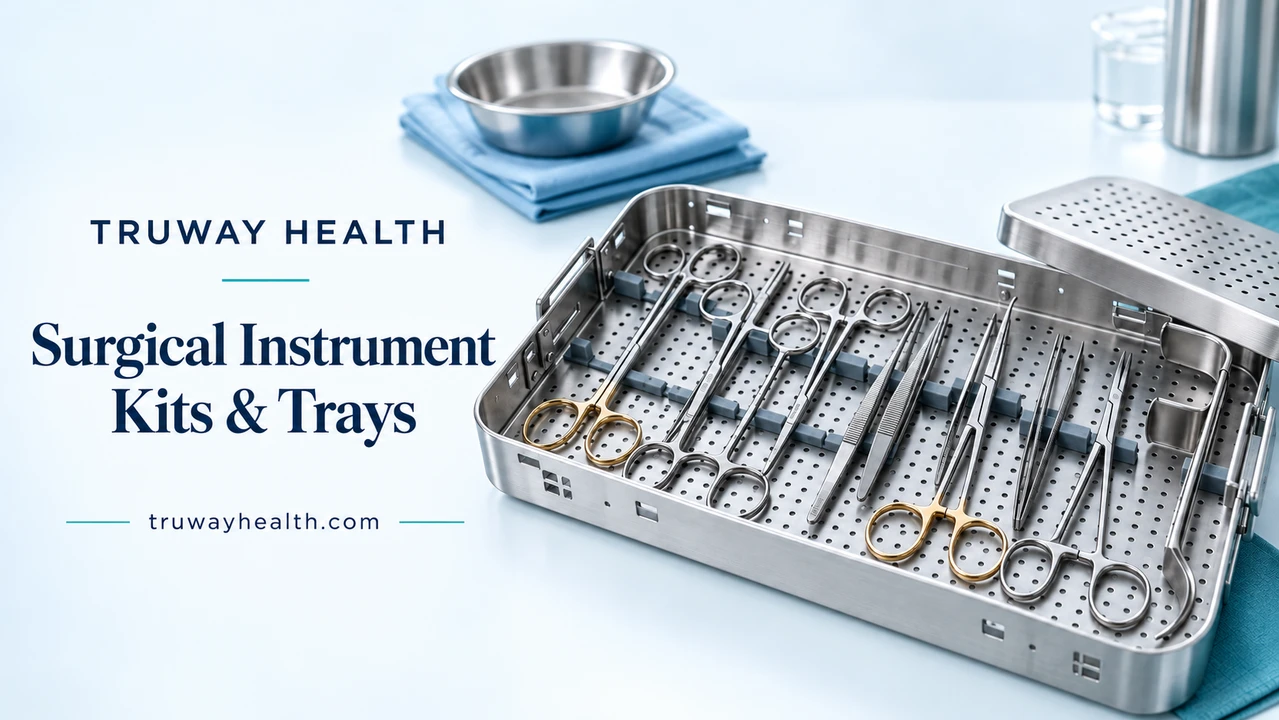
A surgical instrument kit is more than a collection of instruments. Its value lies in the details: the correct patterns, appropriate dimensions, useful quantities, and an organized tray that supports inspection and preparation.
At Truway Health, we believe purchasing conversations should start with a clear understanding of the instruments required. Whether your facility is evaluating a new set, replacing individual instruments, or developing a specialty tray, a detailed instrument list provides the foundation for an informed purchasing decision.
Start With the Instrument List
A piece count alone does not describe a surgical set. Two 50-piece kits can differ substantially in instrument selection, dimensions, and intended application.
A useful specification identifies:
- Instrument name and pattern: Including straight, curved, angled, or bayonet configurations.
- Critical dimensions: Overall length, working length, tip size, and jaw or bite width where applicable.
- Working features: Teeth, serrations, cutting edges, locking mechanisms, and handle configuration.
- Quantity per instrument: Including duplicates requested by the clinical team.
- Tray requirements: Layout, retention features, and compatibility with the facility’s processing workflow.
Documenting these details helps buyers compare quotations and identify substitutions before an order is finalized.
Building a Specialty Tray
Different specialties call for different instrument combinations. A general surgical set may emphasize scissors, tissue forceps, hemostats, needle holders, and retractors. A neurosurgical or spinal instrument request may include more specific patterns, such as:
- Kerrison rongeurs with specified bite widths and angles.
- Penfield dissectors and elevators.
- Bayonet tissue forceps.
- Micro scissors and needle holders.
- Frazier suction tubes.
- Pituitary rongeurs and curettes.
These examples provide a starting point for discussion. Final selection should reflect the intended procedure and the requirements of the clinical team; availability and specifications must be confirmed for each quotation.
Look Beyond Appearance
Product photographs can help identify an instrument’s general pattern, but they do not establish its material composition, performance, or suitability for a particular application.
A thorough purchasing review should request manufacturer information, model or catalog identifiers, material specifications, applicable instructions for use, and available supporting documentation. Buyers should also clarify inspection criteria, warranty terms, and how any proposed substitutions will be approved.
Include the Tray in the Review
The tray deserves the same attention as its contents. Instrument spacing, tip protection, retention, and ease of inspection should be considered alongside the instrument list.
A storage or organizing tray is not automatically a validated sterilization container. Cleaning, disinfection, sterilization, and packaging requirements must follow the applicable manufacturer instructions and the facility’s approved procedures. Confirm whether instruments are supplied sterile or nonsterile before purchase.
Discuss Your Requirements With Truway Health
Preparing a surgical instrument inquiry? Share your itemized list, preferred patterns, dimensions, quantities, tray requirements, and requested delivery date. Include reference catalog numbers or photographs when available to help clarify the request.
Visit truwayhealth.com to contact Truway Health about your surgical instrument kit and tray requirements.
Truway Health News & Insights

Healthcare Equipment Interoperability: Understanding DICOM, HL7, and FHIR
Truway Health | Medical Technology, Digital Infrastructure & Healthcare Innovation Modern medical eq...

Medical-Grade Stainless Steel: Comparing 304 and 316 for Healthcare Equipment
Truway Health | Medical Equipment, Materials Engineering & Healthcare Procurement Not all stainless...

Winter Respiratory Season Preparedness: Essential Supplies for Caregivers and Clinics
Published October 18, 2026 | Truway Health News & Insights When respiratory illnesses rise, preparat...

What Families Should Know When a Loved One Enters Hospice Care
For families with a terminally ill loved one, the start of hospice can land like two realities at on...

Moving from RN to Family Nurse Practitioner What You Need to Know
Experienced registered nurses often reach a point where strong bedside skills still leave a lingerin...

The Guidewire Is Not a Commodity: The Hidden Safety Architecture of Coronary Care
How precision engineering, clinical intelligence, and medical-device traceability are redefining exp...