
Healthcare Fine Art, Innovation, and the Future of Medical Center Placements
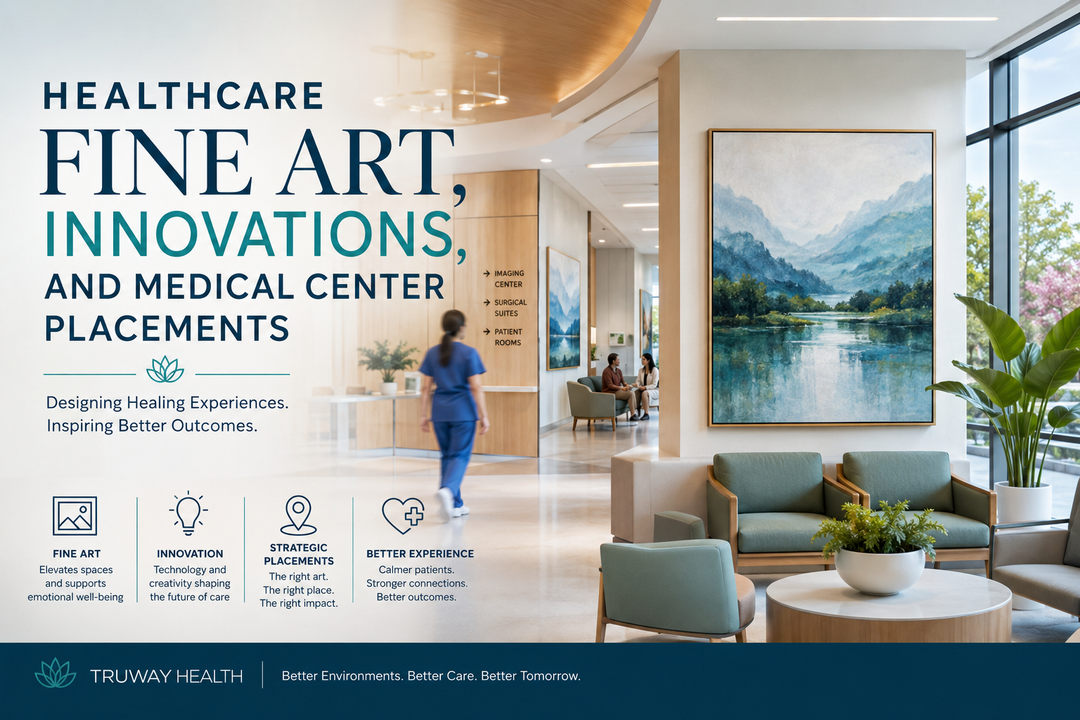
Healthcare Fine Art, Innovation, and the Future of Medical Center Placements
Healthcare is no longer defined solely by clinical outcomes, sterile corridors, and fluorescent lighting. Around the world, hospitals, outpatient centers, oncology clinics, rehabilitation facilities, and wellness campuses are being reimagined as immersive healing environments — spaces where architecture, technology, neuroscience, and fine art converge to improve the patient experience.
At Truway Health, we believe healthcare environments should inspire confidence, calm, resilience, and human connection. The next generation of medical centers will not simply treat illness — they will actively shape emotional well-being through intentional design, evidence-based artwork, sensory innovation, and curated placements.
The Rise of Healing Environments
Modern healthcare design increasingly incorporates “evidence-based design” principles — a framework that studies how physical environments impact recovery, stress levels, patient satisfaction, staff performance, and overall wellness. Research has shown that exposure to calming artwork, natural imagery, daylight, and biophilic design can reduce anxiety, lower perceived pain, and improve patient experience metrics.
The idea is simple but powerful:
A healthcare environment is not neutral.
Every wall, texture, light source, color palette, and artwork communicates emotionally with patients and staff.
Fine art within medical settings has evolved from decorative afterthought into a strategic therapeutic asset.
Why Fine Art Matters in Healthcare
Thoughtfully selected fine art can create measurable psychological and environmental benefits across healthcare systems:
- Reduced stress and anxiety
- Enhanced patient comfort
- Improved family and visitor experience
- Better staff morale and workplace satisfaction
- Positive distraction during treatments and recovery
- Stronger emotional connection to the care environment
Nature-inspired imagery, abstract compositions with soft movement, landscapes, calming figurative works, and culturally resonant artwork consistently perform well in healthcare environments.
Research organizations and healthcare architects increasingly recognize that artwork placement is part of the operational design of modern hospitals — not merely interior decoration.
Healthcare Fine Art as Infrastructure
Healthcare fine art is becoming a true infrastructure layer within modern medical development.
Forward-thinking healthcare systems now integrate:
- Permanent curated collections
- Rotating digital galleries
- Commissioned regional artwork
- NFT-backed provenance registries
- Smart lighting synchronization
- Interactive wellness installations
- Biophilic digital displays
- Therapeutic pediatric immersion environments
- Sensory-responsive oncology treatment rooms
Major medical campuses globally are allocating dedicated budgets for healing arts programs and public installations integrated directly into facility architecture.
This shift represents a broader realization:
Healthcare environments themselves can become part of the treatment ecosystem.
Innovations Transforming Medical Center Placements
AI-Driven Art Placement Systems
Artificial intelligence and spatial analytics are beginning to optimize healthcare art deployment based on:
- Patient flow
- Department type
- Lighting conditions
- Emotional response patterns
- Demographic and cultural alignment
- Recovery intensity zones
Future medical centers may dynamically adjust displayed artwork depending on:
- Time of day
- Patient census
- Specialty department
- Seasonal wellness initiatives
- Behavioral health metrics
Digital Fine Art Ecosystems
Ultra-high-resolution digital canvases and adaptive displays now allow facilities to rotate:
- Seasonal wellness collections
- Local artist exhibitions
- Nature environments
- Guided mindfulness visuals
- Educational anatomy visualization
- Pediatric calming animations
This creates scalable, flexible art infrastructure without requiring permanent physical installations.
NFT & Blockchain Provenance
Emerging healthcare systems are exploring blockchain-backed authentication for fine art provenance, donation tracking, philanthropy programs, and rotating institutional collections.
Potential applications include:
- Tamper-evident ownership records
- Smart insurance verification
- Donor recognition systems
- Licensing automation
- Inter-facility art leasing
- Healthcare art investment trusts
These systems may eventually support decentralized healthcare cultural networks spanning hospitals, universities, rehabilitation centers, and public health facilities.
Specialty Placement Strategies by Medical Department
Different clinical environments benefit from different artistic strategies.
Oncology Centers
Calming landscapes, resilience themes, light gradients, and hopeful visual narratives often help reduce emotional burden during long treatment sessions.
Pediatric Facilities
Interactive installations, immersive storytelling environments, animated visuals, and playful sensory art improve comfort and reduce procedural anxiety.
Behavioral Health Clinics
Minimalist compositions, soft organic movement, nature imagery, and emotionally grounding color palettes can support calming environments.
Surgical Recovery Areas
Evidence suggests restorative visual stimuli — particularly nature-oriented scenes — may assist with stress reduction and perceived recovery comfort.
Executive & Concierge Medicine
High-end medical environments increasingly integrate museum-quality contemporary fine art to reinforce privacy, prestige, trust, and premium patient experience.
The Future of Smart Medical Campuses
The next evolution of healthcare architecture may integrate:
- Responsive environmental lighting
- AI wellness systems
- Augmented reality wayfinding
- Dynamic therapeutic art displays
- Sensor-driven ambient environments
- Neuroaesthetic optimization
Research into healthcare navigation and immersive environments already suggests advanced spatial technologies can reduce anxiety and improve user experience within complex medical campuses.
Healthcare facilities of the future may function more like adaptive wellness ecosystems than traditional institutional hospitals.
Opportunities for Artists, Collectors, and Healthcare Developers
Healthcare fine art creates new opportunities across multiple industries:
For Artists
- Institutional commissions
- Long-term healthcare licensing
- Wellness-focused collections
- Public-private partnerships
- Digital healthcare gallery placements
For Healthcare Systems
- Enhanced patient experience
- Stronger brand identity
- Community engagement
- Philanthropic fundraising opportunities
- Improved architectural differentiation
For Developers & Investors
- Increased asset prestige
- Smart campus integration
- ESG-aligned development strategies
- Cultural infrastructure value creation
Truway Health’s Vision
At Truway Health, we see healthcare fine art as more than aesthetics — it is part of the emerging architecture of human-centered medicine.
The future medical center will blend:
- clinical precision,
- therapeutic environmental design,
- intelligent infrastructure,
- and emotionally resonant artistic experiences.
Healthcare innovation is no longer confined to pharmaceuticals, robotics, or diagnostics.
Sometimes, healing begins with what patients see the moment they enter the room.
Truway Health News & Insights

Moving from RN to Family Nurse Practitioner What You Need to Know
Experienced registered nurses often reach a point where strong bedside skills still leave a lingerin...
The Guidewire Is Not a Commodity: The Hidden Safety Architecture of Coronary Care
How precision engineering, clinical intelligence, and medical-device traceability are redefining exp...

Truth Social Suspends @truwayhealth Without Explanation: Truway Health Challenges Digital Censorship and Demands Accountability
October 9, 2026 | Truway Health News & Insights NEW YORK, NY — Truway Health, Inc. is formally chall...
The Stethoscope Standard: Rethinking the Value of U.S. M1 Through Medical Productive Capacity
Money ultimately derives much of its usefulness from confidence: confidence that a dollar can be exc...

Simple Steps for Seniors to Embrace Healthy and Joyful Living
For seniors seeking holistic wellness, healthy aging can feel harder than it should: the body change...

Healthcare Procurement Readiness: Building a More Resilient Clinical Supply Chain
Healthcare supply chains are often judged by a simple question: Did the product arrive? But for hosp...