
The Future of Liquid Biopsies: Detecting Disease with a Blood Sample
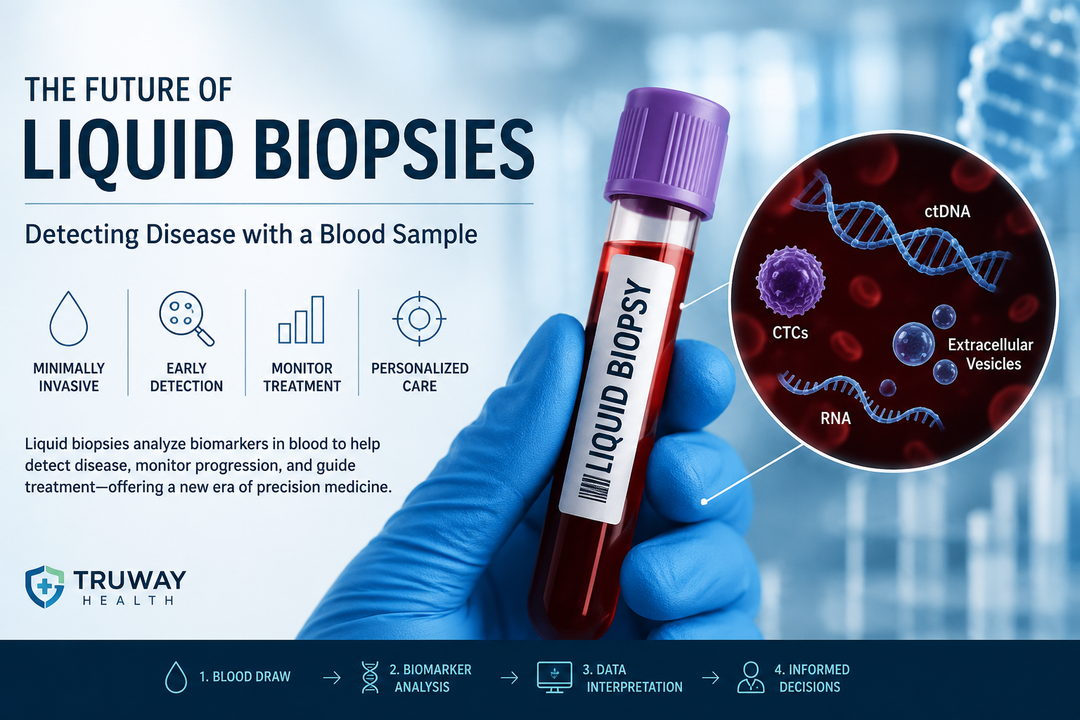
The Future of Liquid Biopsies: Detecting Disease with a Blood Sample
Imagine detecting certain diseases from a simple blood draw instead of an invasive tissue biopsy. That's the promise of liquid biopsy—an evolving diagnostic approach that analyzes biomarkers such as circulating tumor DNA (ctDNA), circulating tumor cells (CTCs), cell-free DNA (cfDNA), RNA fragments, and extracellular vesicles found in the bloodstream.
Unlike traditional biopsies, which capture information from a single location, liquid biopsies may provide a broader snapshot of biological changes occurring throughout the body. Researchers are investigating their use for identifying molecular alterations, monitoring treatment response, detecting minimal residual disease after therapy, and helping identify recurrence earlier in some cancers.
While several liquid biopsy tests are already used in specific clinical settings, this technology continues to advance rapidly. Improvements in next-generation sequencing, molecular diagnostics, and computational analysis are increasing the sensitivity and specificity of these tests, opening new possibilities for precision medicine.
Although liquid biopsies are not a replacement for every conventional biopsy and are not appropriate for every condition, they represent an important step toward less invasive, more personalized healthcare.
At Truway Health, we continue to follow emerging developments in molecular diagnostics, laboratory medicine, and precision healthcare as these innovations shape the future of clinical decision-making.
This article is intended for educational purposes only and should not be interpreted as medical advice. Clinical decisions should always be made in consultation with qualified healthcare professionals and based on current evidence and regulatory guidance.
Truway Health News & Insights

Moving from RN to Family Nurse Practitioner What You Need to Know
Experienced registered nurses often reach a point where strong bedside skills still leave a lingerin...
The Guidewire Is Not a Commodity: The Hidden Safety Architecture of Coronary Care
How precision engineering, clinical intelligence, and medical-device traceability are redefining exp...

Truth Social Suspends @truwayhealth Without Explanation: Truway Health Challenges Digital Censorship and Demands Accountability
October 9, 2026 | Truway Health News & Insights NEW YORK, NY — Truway Health, Inc. is formally chall...

The Stethoscope Standard: Rethinking the Value of U.S. M1 Through Medical Productive Capacity
Money ultimately derives much of its usefulness from confidence: confidence that a dollar can be exc...

Simple Steps for Seniors to Embrace Healthy and Joyful Living
For seniors seeking holistic wellness, healthy aging can feel harder than it should: the body change...

Healthcare Procurement Readiness: Building a More Resilient Clinical Supply Chain
Healthcare supply chains are often judged by a simple question: Did the product arrive? But for hosp...