
GeneSpring™ Telomere Ledger: Mapping Human Aging Through Telomeres, Blood Biomarkers, and Genomic Intelligence
By Truway Health Research Division
Introduction
Every human cell carries a biological record of time.
Embedded within our chromosomes are structures known as telomeres—repetitive DNA sequences that protect chromosome ends from degradation and maintain genomic stability throughout life. As cells divide, telomeres gradually shorten, creating a measurable biological signal associated with aging, cellular stress, regenerative capacity, and disease susceptibility. Recent research has strengthened the connection between telomere dynamics, cellular senescence, immune function, and age-related disorders.
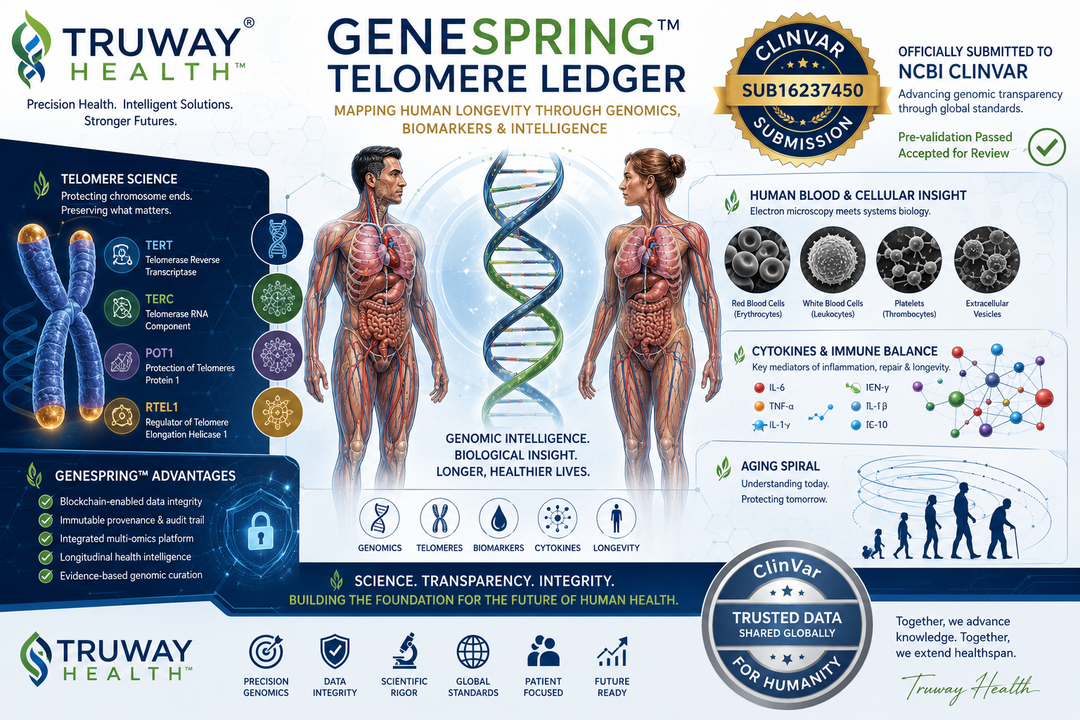
To explore these relationships, Truway Health developed the GeneSpring™ Telomere Ledger, a scientific framework designed to integrate genomic variants, blood biomarker intelligence, telomere-associated pathways, and longitudinal health analytics into a unified research platform.
Why Telomeres Matter
Telomeres function as protective caps at chromosome termini. When telomeres become critically short, cells may enter senescence, cease dividing, or undergo programmed cell death. These processes are increasingly recognized as contributors to biological aging and age-associated disease.
Research has linked telomere dysfunction to:
-
Bone marrow failure syndromes
-
Pulmonary fibrosis
-
Immune aging
-
Genomic instability
-
Neurodegenerative processes
-
Cancer susceptibility
Inherited telomere biology disorders often arise from pathogenic variants affecting genes responsible for telomere maintenance and repair.
The GeneSpring™ Scientific Framework
The GeneSpring™ Telomere Ledger was designed around four foundational genes that play critical roles in telomere maintenance:
TERT
TERT encodes the catalytic component of telomerase, the enzyme responsible for maintaining telomere length in specific cell populations. Pathogenic TERT variants have been associated with telomere biology disorders, pulmonary fibrosis, and bone marrow failure syndromes.
TERC
TERC provides the RNA template used by telomerase during telomere extension. Functional disruption of TERC can impair telomere maintenance and contribute to inherited telomere disorders.
POT1
POT1 is a member of the shelterin complex that protects chromosome ends and regulates telomere architecture. Alterations in POT1 have been associated with melanoma susceptibility, glioma risk, and long-telomere cancer syndromes.
RTEL1
RTEL1 encodes a helicase critical for telomere replication and genomic stability. Variants affecting RTEL1 are linked to dyskeratosis congenita spectrum disorders and other telomere maintenance syndromes.
Electron Microscopy and Human Blood Architecture
The latest GeneSpring™ visual models incorporate electron microscopy-inspired representations of human blood components, including erythrocytes, leukocytes, platelets, extracellular vesicles, and vascular structures.
Blood provides a unique systems-level view into human physiology. It reflects:
-
Immune activity
-
Oxidative stress burden
-
Inflammatory signaling
-
Cellular turnover
-
Regenerative capacity
Emerging evidence suggests that chronic inflammation and immune dysregulation may accelerate telomere attrition through sustained oxidative and replicative stress.
Cytokines and Cellular Aging
The GeneSpring™ mapping model also highlights the role of cytokines in longevity research.
Key inflammatory mediators such as:
-
IL-6
-
TNF-α
-
IL-1β
-
IFN-γ
participate in immune signaling pathways that influence cellular repair, stress responses, and tissue homeostasis.
Persistent inflammatory signaling may contribute to accelerated biological aging and telomere shortening. Conversely, balanced immune regulation may support healthier aging trajectories.
Biological Age Versus Chronological Age
One of the most important developments in longevity science is the distinction between chronological age and biological age.
Modern aging research increasingly evaluates:
-
Telomere length
-
Epigenetic clocks
-
DNA methylation signatures
-
Inflammatory biomarkers
-
Physiologic resilience metrics
Together, these measurements provide a multidimensional view of biological aging beyond the calendar age of an individual.
ClinVar Milestone
In June 2026, the inaugural GeneSpring™ Telomere Ledger submission successfully completed ClinVar pre-validation review and advanced for processing within the National Center for Biotechnology Information (NCBI) submission workflow.
The submission focused on literature-supported variants within telomere maintenance genes and represents a foundational step toward future genomic curation initiatives, variant interpretation frameworks, and longitudinal aging research programs.
Future Directions
The next phase of GeneSpring™ research seeks to integrate:
-
Telomere length measurements
-
Genomic variant interpretation
-
Whole-body composition metrics
-
Cytokine intelligence
-
Sleep and circadian biology
-
Longitudinal health outcomes
The long-term vision is to establish a comprehensive human longevity intelligence platform capable of supporting research, clinical investigations, and future precision-health applications.
Conclusion
Human aging is not governed by a single biomarker. It emerges from a complex interaction between genetics, cellular maintenance systems, immune regulation, environmental exposures, and time.
By combining telomere biology, genomic mapping, blood biomarker intelligence, and longitudinal scientific provenance, the GeneSpring™ Telomere Ledger aims to contribute to a deeper understanding of the biological mechanisms that shape healthspan, resilience, and longevity.
As aging science continues to evolve, telomeres remain one of the most compelling windows into the molecular architecture of human life.
Truway Health News & Insights

Moving from RN to Family Nurse Practitioner What You Need to Know
Experienced registered nurses often reach a point where strong bedside skills still leave a lingerin...

The Guidewire Is Not a Commodity: The Hidden Safety Architecture of Coronary Care
How precision engineering, clinical intelligence, and medical-device traceability are redefining exp...

Truth Social Suspends @truwayhealth Without Explanation: Truway Health Challenges Digital Censorship and Demands Accountability
October 9, 2026 | Truway Health News & Insights NEW YORK, NY — Truway Health, Inc. is formally chall...

The Stethoscope Standard: Rethinking the Value of U.S. M1 Through Medical Productive Capacity
Money ultimately derives much of its usefulness from confidence: confidence that a dollar can be exc...

Simple Steps for Seniors to Embrace Healthy and Joyful Living
For seniors seeking holistic wellness, healthy aging can feel harder than it should: the body change...

Healthcare Procurement Readiness: Building a More Resilient Clinical Supply Chain
Healthcare supply chains are often judged by a simple question: Did the product arrive? But for hosp...