
Beetroots: Nutrition, Nitric Oxide, Exercise Performance & Everyday Wellness
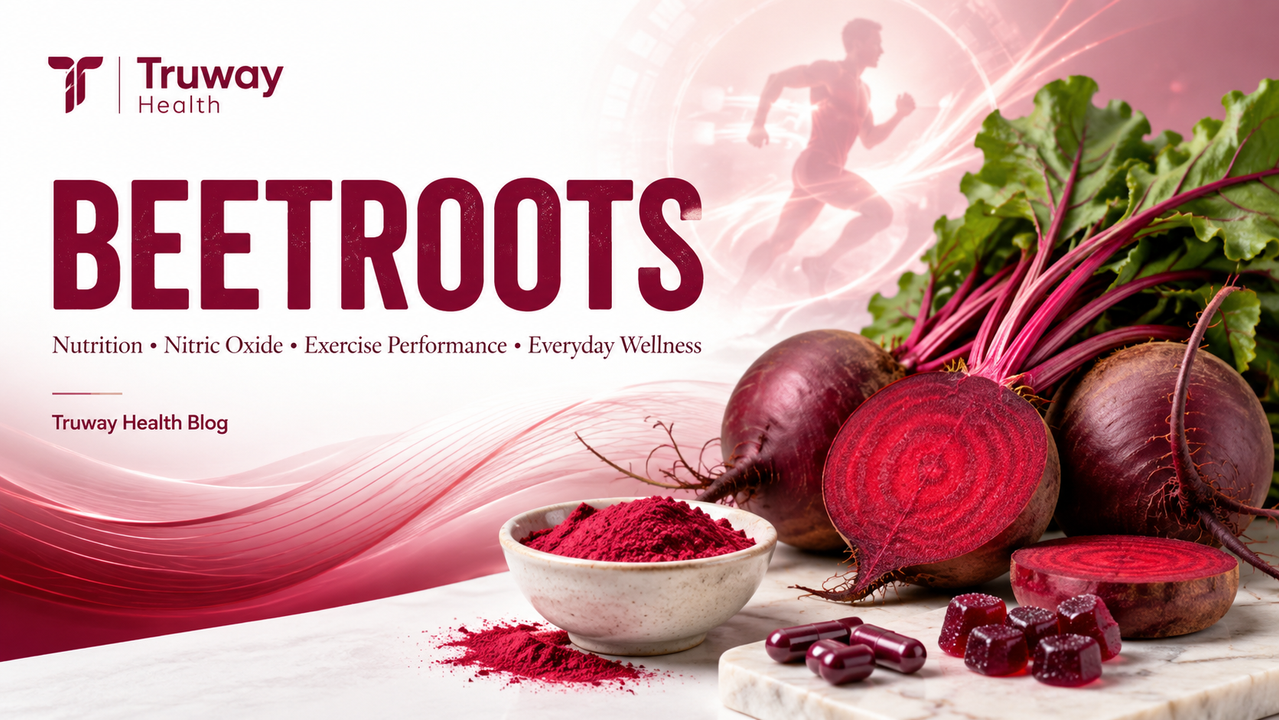
Beetroots have moved far beyond the produce aisle. Once known mainly as a colorful root vegetable, beets are now widely used in juices, powders, gummies, capsules, sports-nutrition products, and everyday wellness supplements.
Their popularity is driven by a simple combination: beets are naturally nutrient-dense, contain unique plant compounds, and provide dietary nitrates that the body can use in normal nitric-oxide pathways.
For people interested in nutrition, exercise, cardiovascular wellness, or simply adding more plant-based foods to their routine, beetroot is worth understanding.
What Is Beetroot?
Beetroot, commonly called beet, is the edible root of Beta vulgaris. It is typically deep red or purple, although golden and striped varieties also exist.
Beets can be consumed:
- Raw
- Roasted
- Boiled
- Pickled
- Juiced
- Dried and powdered
- Concentrated into supplements
- Formulated into capsules or gummies
The root contains carbohydrates, fiber, vitamins, minerals, naturally occurring nitrates, and antioxidant pigments called betalains.
Beetroot Nutrition
Whole beetroots provide several important nutrients while remaining relatively low in calories.
Beets are particularly known for providing:
- Folate, an essential B vitamin involved in normal cell division
- Manganese, which participates in normal metabolism and antioxidant processes
- Potassium, an important electrolyte
- Dietary fiber, especially when eating the whole vegetable
- Naturally occurring nitrates
- Betalain pigments, responsible for the characteristic red-purple color
The nutritional profile changes depending on how beets are processed. Juice, for example, provides less fiber than whole beetroot, while concentrated powders and supplements may deliver larger amounts of beet-derived material in a smaller serving.
Why Nitric Oxide Gets So Much Attention
One of the most interesting aspects of beetroot nutrition is its naturally occurring nitrate content.
Dietary nitrate can participate in a biological pathway in which nitrate is converted to nitrite and eventually to nitric oxide.
Nitric oxide is a signaling molecule involved in several normal physiological processes, including regulation of vascular tone and blood flow.
This mechanism is one reason beetroot has become particularly popular in sports nutrition and cardiovascular-wellness research.
It is important to distinguish this normal physiological role from disease-treatment claims. Beetroot products are foods or dietary supplements and should not be represented as medications for cardiovascular disease, hypertension, or other medical conditions unless specifically authorized for such use.
Beetroot and Exercise
Athletes have increasingly incorporated beetroot juice and beet-derived supplements into training routines.
Research has explored whether dietary nitrate may influence:
- Exercise efficiency
- Oxygen utilization
- Endurance performance
- Perceived exertion
- Muscle function
- Recovery-related physiology
Results can vary considerably between individuals and products.
The actual nitrate concentration matters. Two beetroot products can contain similar amounts of beet powder while delivering very different nitrate levels.
For consumers specifically interested in exercise performance, a standardized nitrate concentration can therefore be more informative than simply seeing a large milligram number on the front of a supplement bottle.
Beetroot and Circulatory Wellness
Because nitric oxide participates in vascular regulation, beetroot has also become popular among consumers interested in maintaining normal circulatory function.
Clinical studies have investigated beetroot and dietary nitrate in relation to blood-pressure physiology and vascular function. While some research is encouraging, outcomes vary depending on dose, duration, population, diet, and individual biology.
Consumers should view beetroot as part of an overall nutrition and wellness strategy rather than as a replacement for prescribed medical treatment.
Anyone being treated for cardiovascular conditions or using medications that affect blood pressure should discuss concentrated beetroot supplementation with an appropriate healthcare professional.
Beetroot's Natural Pigments: Betalains
Beetroots contain distinctive pigments known as betalains.
Two major groups include:
Betacyanins
These create the characteristic red and violet shades.
Betaxanthins
These produce yellow and orange colors.
These compounds have been extensively studied for their antioxidant properties in laboratory and nutritional research.
Their striking color is also why beetroot has become popular as a natural food coloring and ingredient in wellness beverages and functional foods.
Whole Beetroot vs. Beetroot Juice
Whole beets provide fiber along with their micronutrients and plant compounds.
Beet juice offers a more concentrated and convenient way to consume beet-derived nutrients, but much of the insoluble fiber is removed during juicing.
Beet juice is commonly used by athletes because it can deliver dietary nitrate relatively quickly and conveniently.
The downside is portability and flavor. Some consumers also find concentrated beet juice difficult to incorporate into a daily routine.
Beetroot Powder
Beetroot powder is produced by drying beetroot and grinding it into a concentrated powder.
It can be mixed into:
- Water
- Smoothies
- Protein shakes
- Yogurt
- Oatmeal
- Pre-workout beverages
Powder provides versatility and can be easier to store than fresh beetroot or refrigerated juice.
However, consumers should not assume that every gram of beetroot powder delivers a particular amount of nitrate. Processing methods and raw-material composition can substantially affect the final product.
Beetroot Capsules
Capsules offer one of the simplest ways to incorporate beetroot into a supplement routine.
A typical beetroot capsule product may provide powdered or concentrated beetroot in measured servings.
Potential advantages include:
- No beet flavor
- Easy portion control
- Travel-friendly packaging
- Longer shelf stability
- Convenient integration into an existing supplement routine
The front-label milligram amount should always be interpreted alongside the Supplement Facts panel.
A product labeled “1,300 mg beetroot,” for example, tells consumers the quantity of beet-derived material but does not necessarily reveal its standardized nitrate concentration.
Beetroot Gummies
Gummies have become another increasingly popular delivery format.
Their biggest advantage is convenience. Consumers who dislike swallowing capsules may find gummies much easier to use consistently.
When comparing beetroot gummies, examine:
- Beetroot amount per serving
- Added sugar
- Sweeteners
- Serving size
- Additional vitamins or minerals
- Other active ingredients
- Allergen information
- Ingredient sourcing
- Manufacturing and quality documentation
A colorful package should never substitute for a complete Supplement Facts panel.
Choosing a Beetroot Supplement
Quality varies significantly across dietary supplements.
Before purchasing a beetroot supplement, consider several factors.
Ingredient Transparency
The label should clearly identify what form of beetroot is being used.
Examples include beet root powder, beet extract, beet juice powder, or standardized beet concentrate.
Serving Size
Always distinguish between the amount per capsule and the amount per serving.
A bottle displaying “1,300 mg” may require two capsules to reach that amount.
Nitrate Standardization
Consumers focused specifically on exercise or nitric-oxide nutrition may want products that disclose nitrate content rather than relying solely on beetroot weight.
Manufacturing Quality
Look for suppliers that can provide appropriate manufacturing and quality documentation.
Depending on the product and market, this may include:
- Certificate of Analysis
- Microbiological testing
- Heavy-metal testing
- Ingredient identity testing
- Lot traceability
- Expiration dating
- Manufacturing-facility information
Added Ingredients
Combination formulas may include ingredients such as:
- Vitamin C
- Magnesium
- Citrulline
- Electrolytes
- Botanical extracts
Read the complete label to understand what you are actually consuming.
Can You Get the Same Benefits From Food?
For many people, absolutely.
Eating whole vegetables remains one of the most valuable ways to improve dietary quality.
Roasted beetroot, beet salads, blended smoothies, and other whole-food preparations provide fiber and numerous naturally occurring plant compounds.
Supplements primarily offer convenience and concentration.
They should complement a balanced diet rather than replace vegetables and other nutrient-dense foods.
A Note About Beeturia
Some people notice red or pink urine after consuming beetroot.
This phenomenon is known as beeturia and can also affect stool color.
The striking appearance can be surprising, but the coloration may simply reflect beet pigments passing through the body.
Persistent or unexplained blood-like discoloration should not automatically be assumed to come from beetroot, however, and appropriate medical evaluation should be sought when there is uncertainty.
Who Should Use Extra Caution?
Concentrated dietary supplements may not be appropriate for everyone.
Consider speaking with a qualified healthcare professional before using concentrated beetroot products if you:
- Take medication affecting blood pressure
- Have been advised to restrict potassium or particular nutrients
- Have significant kidney disease
- Have a history of kidney stones or specific oxalate restrictions
- Are pregnant or nursing
- Take multiple prescription medications
- Are preparing for surgery
Individual health circumstances matter more than generalized supplement recommendations.
Where Beetroot Fits Into Modern Wellness
Beetroot sits at an interesting intersection between traditional nutrition and modern functional supplementation.
It is simultaneously:
- A whole vegetable
- A source of dietary nitrate
- A colorful antioxidant-rich food
- A popular sports-nutrition ingredient
- A functional beverage ingredient
- A dietary supplement ingredient
That versatility helps explain why beetroot products continue appearing across fitness, nutrition, and wellness categories.
The Truway Health Perspective
At Truway Health, we believe consumers should have access to products accompanied by clear information about formulation, serving size, ingredient identity, and responsible use.
Whether you choose whole beetroots, powder, juice, gummies, or capsules, the most important considerations remain quality, transparency, and proper nutritional context.
Beetroot can be an interesting addition to an active and health-conscious lifestyle—but no supplement replaces a balanced diet, appropriate medical care, adequate sleep, physical activity, or individualized healthcare guidance.
Frequently Asked Questions
What does beetroot do in the body?
Beetroot provides nutrients and plant compounds, including dietary nitrate. Nitrate can participate in the body's normal nitric-oxide pathway.
Is beetroot the same as a nitric oxide supplement?
Not exactly. Beetroot naturally contains nitrate, which the body may convert into nitric oxide. The actual nitrate content varies by product.
Are capsules better than gummies?
Neither format is inherently better. Capsules often contain fewer added ingredients, while gummies can be more convenient for people who dislike swallowing pills.
Is beetroot good before exercise?
Beetroot and dietary nitrate have been studied extensively in exercise nutrition. Individual responses vary, and standardized nitrate content is an important consideration when comparing sports-nutrition products.
Can I take beetroot every day?
Many people consume beetroot regularly as a food. Concentrated supplements should be taken according to their labeled directions and individual health circumstances.
Shop Beetroot & Wellness Products
Explore Truway Health's growing selection of beetroot capsules, beetroot gummies, hydration products, minerals, and everyday nutritional supplements designed to support informed wellness choices.
Truway Health News & Insights

Healthcare Equipment Interoperability: Understanding DICOM, HL7, and FHIR
Truway Health | Medical Technology, Digital Infrastructure & Healthcare Innovation Modern medical eq...

Medical-Grade Stainless Steel: Comparing 304 and 316 for Healthcare Equipment
Truway Health | Medical Equipment, Materials Engineering & Healthcare Procurement Not all stainless...

Winter Respiratory Season Preparedness: Essential Supplies for Caregivers and Clinics
Published October 18, 2026 | Truway Health News & Insights When respiratory illnesses rise, preparat...

What Families Should Know When a Loved One Enters Hospice Care
For families with a terminally ill loved one, the start of hospice can land like two realities at on...

Moving from RN to Family Nurse Practitioner What You Need to Know
Experienced registered nurses often reach a point where strong bedside skills still leave a lingerin...

The Guidewire Is Not a Commodity: The Hidden Safety Architecture of Coronary Care
How precision engineering, clinical intelligence, and medical-device traceability are redefining exp...