
Moving from RN to Family Nurse Practitioner What You Need to Know
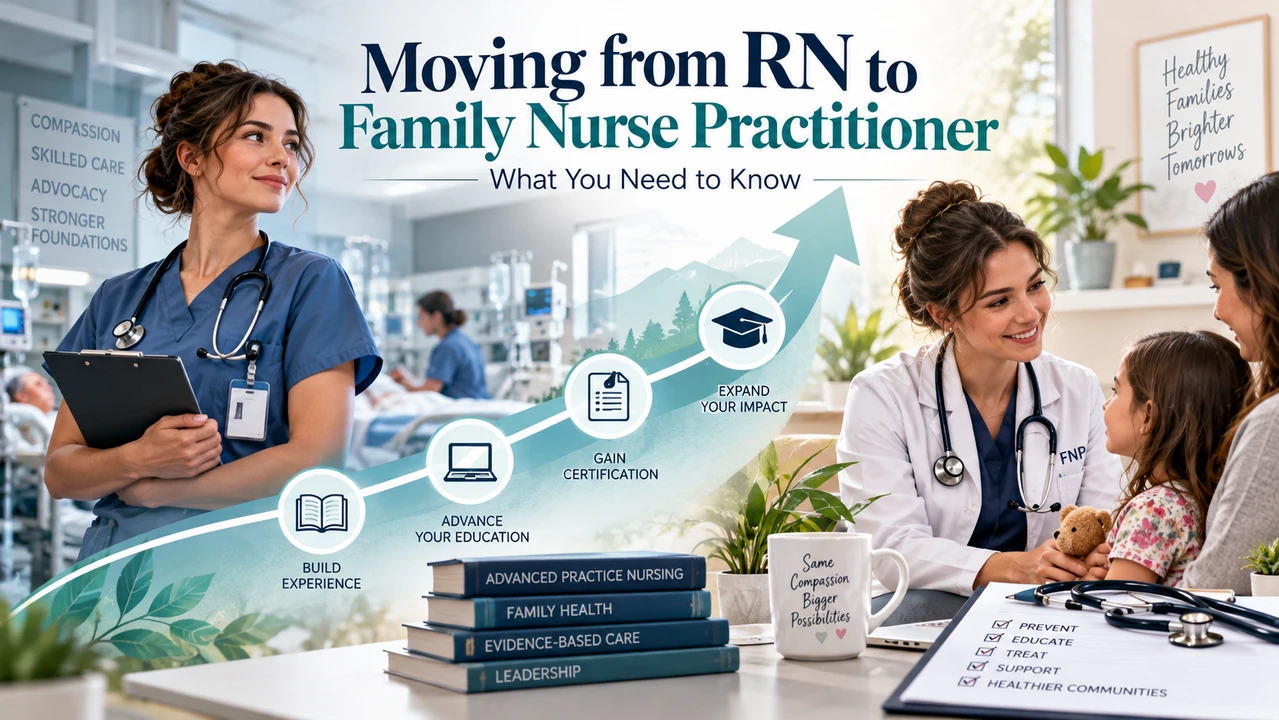
Experienced registered nurses often reach a point where strong bedside skills still leave a lingering question about what comes next. The core tension is real: pursuing the Family Nurse Practitioner career path can open doors to advanced nursing roles, yet it also demands a new level of accountability, clinical judgment, and commitment to healthcare professional development. For nurses weighing nursing career advancement, the decision isn’t just about a new title, it’s about expanding the ability to assess, diagnose, and guide patients through whole-person care across the lifespan. Clarity turns ambition into a grounded next step.
Understanding the RN to FNP Scope Shift
At its core, moving from RN to Family Nurse Practitioner means shifting from carrying out care plans to creating them. An RN focuses on monitoring, supporting, and coordinating treatment, while an FNP uses advanced assessment to diagnose, prescribe, and manage ongoing care within a wider scope. That expanded role depends on graduate-level education and supervised clinical training, because the decisions rest more directly on you.
Why it matters: the FNP role can give you more continuity with patients and more influence over outcomes. With 25% of U.S. health visits, conducted by a non-physician, the system increasingly relies on clinicians who can lead visits from start to finish.
Picture a patient with uncontrolled blood pressure. As an RN, you reinforce teaching and report changes; as an FNP, you adjust meds, order labs, and build a whole-life plan. That growth in responsibility is exactly what MSN programs are designed to build.
See How an MSN Bridges You Into FNP Practice
Once you understand how the RN-to-FNP scope expands, the next question is how you gain the preparation, and the authority, to practice at that level. Earning a family nurse practitioner master’s degree (often an MSN with an FNP focus) is a key bridge because it builds the advanced clinical training and credentials that support diagnosing conditions, prescribing treatments, and delivering comprehensive primary care to patients across ages and backgrounds.
Many programs are designed with an online-to-clinical flow: didactic coursework can be completed online with more flexibility around work and family life, while hands-on clinical experiences develop the higher-level assessment, clinical decision-making, and patient-centered management skills expected in FNP practice. If you want to explore how these master’s programs are typically structured and what to expect, this is a good place to learn more.
Plan → Train → Certify → Launch
To keep the RN to FNP path manageable, use a simple rhythm that turns big milestones into weekly moves. This workflow helps you align graduate nursing curriculum, clinical hours requirements, and the FNP certification process while still balancing work and education.
|
Stage |
Action |
Goal |
|
Compare program steps, timelines, and requirements |
Clear step-by-step FNP pathway you can follow |
|
|
Build your support plan |
Coordinate work schedule, family needs, and finances |
Protected study time and reduced stress triggers |
|
Progress through coursework |
Set weekly study blocks; track assignments and competencies |
Steady mastery of advanced practice foundations |
|
Secure and complete clinicals |
Confirm preceptors early; log hours; seek feedback |
Clinical hours requirements met with growing confidence |
|
Prepare for certification |
Choose exam date; review plan; practice questions consistently |
Ready to complete the FNP certification process |
|
Transition into practice |
Update resume; clarify onboarding needs; set wellness routines |
Smooth role shift and sustainable performance |
Each stage feeds the next: planning creates space, structure supports learning, and learning strengthens clinical judgment. By reviewing your timeline monthly, you can adjust pace without losing momentum.
Common RN to FNP Questions, Answered
Q: What can an FNP do that an RN cannot?
A: An FNP is trained to assess, diagnose, and manage common health conditions with more autonomy than an RN. Depending on your state rules, that can include prescribing medications and ordering tests. A smart next step is to read your state board’s scope language before choosing a program.
Q: How hard is FNP certification, and what do people struggle with most?
A: Many nurses find the breadth of primary care topics and test stamina most challenging, not a single “trick” subject. Start early with a weekly question set and review rationales, not just scores. Schedule your exam when you can protect sleep and recovery time.
Q: Can I work full-time while doing an FNP program?
A: Many do, but clinical rotations can make full-time work feel tight fast. If possible, plan for reduced hours during heavy clinical terms or bundle shifts to preserve study days. Build in one non-negotiable reset block each week to prevent burnout.
Q: What continuing education do FNPs need after graduating?
A: You will typically need CE for state licensure renewal and additional requirements tied to national certification renewal. Track CE as you go, and choose topics that match your patient population, like diabetes, mental health, or pediatrics. Keeping a simple CE folder saves stress later.
Q: Should I worry about switching from “task mode” to provider decision-making?
A: It is a normal adjustment, because you are moving from carrying out orders to building a plan of care. Seek preceptors who explain clinical reasoning out loud and practice writing concise differentials. Over time, repetition builds confidence and calmer judgment.
Build an RN-to-FNP Path That Supports Your Whole Life
The pull toward advanced practice can be strong, yet the leap from RN to FNP often brings real questions about scope, certification, and sustainable work-life balance. A grounded approach, clarifying values, aligning expectations with real FNP responsibilities, and planning with steady realism, keeps next steps in nursing career decisions from feeling like a gamble. When that mindset leads, FNP career benefits and advanced practice nursing rewards become clearer, and professional growth nursing feels purposeful instead of pressured, supporting long-term nurse practitioner job satisfaction. Choose the FNP path when it aligns with your values, bandwidth, and the care you want to lead.
Truway Health News & Insights
Moving from RN to Family Nurse Practitioner What You Need to Know
Experienced registered nurses often reach a point where strong bedside skills still leave a lingerin...
The Guidewire Is Not a Commodity: The Hidden Safety Architecture of Coronary Care
How precision engineering, clinical intelligence, and medical-device traceability are redefining exp...

Truth Social Suspends @truwayhealth Without Explanation: Truway Health Challenges Digital Censorship and Demands Accountability
October 9, 2026 | Truway Health News & Insights NEW YORK, NY — Truway Health, Inc. is formally chall...

The Stethoscope Standard: Rethinking the Value of U.S. M1 Through Medical Productive Capacity
Money ultimately derives much of its usefulness from confidence: confidence that a dollar can be exc...

Simple Steps for Seniors to Embrace Healthy and Joyful Living
For seniors seeking holistic wellness, healthy aging can feel harder than it should: the body change...

Healthcare Procurement Readiness: Building a More Resilient Clinical Supply Chain
Healthcare supply chains are often judged by a simple question: Did the product arrive? But for hosp...