
Autumn Healthcare Tips & Tricks: A Simple Guide to Staying Well This Season
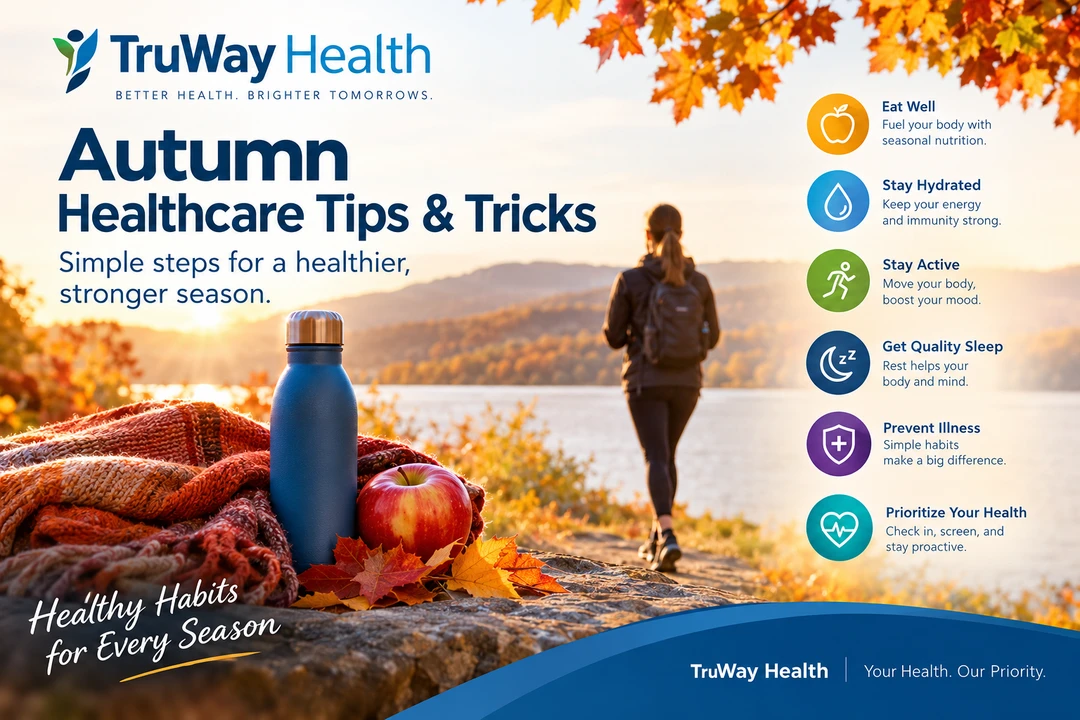
As the leaves change, so do our routines. Autumn brings cooler temperatures, shorter days, changing weather, and the return of indoor activities. It is also an ideal time to reset healthy habits and prepare your body for the months ahead.
At TruWay Health, we believe good healthcare starts with everyday awareness. Small, consistent choices can make a meaningful difference in how you feel throughout the season.
Here are some practical autumn healthcare tips and tricks to help you stay healthy, energized, and prepared.
1. Prepare for Seasonal Changes
Cooler temperatures can affect sleep, activity levels, hydration, and even how frequently we spend time outdoors.
Consider making a simple seasonal checklist:
- Check your home heating system before temperatures drop.
- Dress appropriately for changing temperatures.
- Keep commonly used medications and health supplies organized.
- Maintain regular healthcare appointments.
- Pay attention to changes in energy, sleep, mood, or physical symptoms.
Autumn is a good time to transition gradually rather than waiting until winter arrives.
2. Give Your Nutrition a Seasonal Refresh
Autumn offers plenty of nutritious foods that can become part of a balanced diet.
Consider incorporating:
- Pumpkins and other winter squash
- Apples and pears
- Leafy greens
- Sweet potatoes
- Beans and lentils
- Nuts and seeds
- Whole grains
Aim for variety rather than perfection. A colorful plate generally makes it easier to obtain a broad range of nutrients.
Healthcare tip: Seasonal comfort foods can still fit into a healthy lifestyle. Focus on portions, preparation methods, and overall dietary balance.
3. Don't Forget Hydration
When the weather cools, thirst may become less noticeable than it is during summer. That does not mean your body stops needing fluids.
Keep water accessible throughout the day and consider unsweetened beverages such as herbal tea when temperatures fall.
Hydration is particularly important when you're physically active, spending time outdoors, or working in heated indoor environments.
4. Protect Your Sleep Schedule
Shorter days can influence daily routines and sleep patterns.
Try to maintain a consistent schedule:
Wake → Get morning light → Stay active → Wind down → Sleep
Keeping regular sleep and wake times can help reinforce your body's normal circadian rhythm.
Create a relaxing nighttime routine by reducing stimulating activities before bed and keeping your sleeping environment comfortable, quiet, and dark.
5. Keep Moving
Cooler weather is not a reason to abandon physical activity.
Try autumn-friendly activities such as:
- Walking
- Hiking
- Cycling
- Strength training
- Stretching
- Yoga
- Recreational sports
If outdoor conditions aren't favorable, move indoors. Even short periods of activity throughout the day can contribute to your overall fitness.
The best exercise is often the one you can do consistently.
6. Practice Smart Infection Prevention
Autumn means more people spending time indoors and in close proximity to one another.
Simple preventive habits remain valuable:
- Wash your hands regularly.
- Avoid touching your eyes, nose, and mouth unnecessarily.
- Improve indoor ventilation when practical.
- Stay home when you're ill when possible.
- Follow current recommendations from your healthcare professional regarding seasonal vaccinations.
If you develop persistent, severe, or concerning symptoms, seek appropriate medical care rather than attempting to self-diagnose.
7. Use Autumn as Your Healthcare Checkpoint
Think of autumn as an annual health reset.
Depending on your age, medical history, and individual risk factors, this may be a good time to discuss:
- Preventive screenings
- Blood pressure
- Cholesterol
- Blood glucose
- Medication review
- Vaccination status
- Dental care
- Vision and hearing
- Sleep concerns
- Mental and emotional wellbeing
Preventive healthcare is most effective when potential problems are identified before they become emergencies.
8. Pay Attention to Your Mental Wellbeing
Seasonal changes can affect routines, social interaction, activity levels, and exposure to daylight.
Make time for activities that support wellbeing:
Connect. Move. Get outside. Rest. Recharge.
If you notice persistent changes in mood, motivation, sleep, appetite, concentration, or your ability to function normally, consider speaking with a qualified healthcare professional.
Taking mental wellbeing seriously is part of taking care of your whole health.
9. Make Your Home Fall-Ready
A few household checks can also support health and safety.
Consider:
- Testing smoke and carbon-monoxide detectors.
- Checking indoor air quality and ventilation.
- Cleaning or replacing HVAC filters as appropriate.
- Removing trip hazards.
- Improving lighting as days become shorter.
- Preparing emergency supplies before severe weather arrives.
A healthier environment begins with a safer environment.
10. Don't Neglect Your Skin
Cooler, drier air can leave skin feeling dry or irritated.
Simple strategies include:
- Using a gentle moisturizer.
- Taking shorter, comfortably warm showers rather than very hot ones.
- Protecting exposed skin from cold and wind.
- Continuing sun protection during outdoor activities.
Your skin remains exposed to environmental conditions throughout the year.
11. Listen to Your Body
One of the most useful healthcare tools is something you always carry with you: awareness.
Notice changes that are unusual for you.
Persistent symptoms, unexplained changes, worsening pain, breathing difficulties, sudden neurological symptoms, or other serious concerns deserve professional medical evaluation.
Don't rely exclusively on internet searches or health apps to determine what a symptom means. Technology can support healthcare decisions, but it does not replace appropriate clinical evaluation.
The Autumn Health Reset
You don't need to completely reinvent your lifestyle when the seasons change.
Start with five simple goals:
1. Eat a little better.
2. Move a little more.
3. Sleep a little more consistently.
4. Stay connected.
5. Schedule the healthcare you've been postponing.
Small improvements compound over time.
Your Health, Your Way Forward
Autumn is a natural reminder that health is dynamic. Our environment changes, our routines change, and our healthcare needs can change with them.
Use the season as an opportunity to pause, reassess, and prepare.
At TruWay Health, we're committed to helping people make informed decisions about their health through education, innovation, and accessible healthcare resources.
Here's to a healthier autumn — one good habit at a time.
Disclaimer: This article is provided for general educational and informational purposes and is not intended to provide medical advice, diagnosis, or treatment. Individual healthcare needs vary. Consult an appropriately qualified healthcare professional regarding personal medical concerns or before making significant changes to your healthcare routine.
Truway Health News & Insights

Healthcare Equipment Interoperability: Understanding DICOM, HL7, and FHIR
Truway Health | Medical Technology, Digital Infrastructure & Healthcare Innovation Modern medical eq...

Medical-Grade Stainless Steel: Comparing 304 and 316 for Healthcare Equipment
Truway Health | Medical Equipment, Materials Engineering & Healthcare Procurement Not all stainless...

Winter Respiratory Season Preparedness: Essential Supplies for Caregivers and Clinics
Published October 18, 2026 | Truway Health News & Insights When respiratory illnesses rise, preparat...

What Families Should Know When a Loved One Enters Hospice Care
For families with a terminally ill loved one, the start of hospice can land like two realities at on...

Moving from RN to Family Nurse Practitioner What You Need to Know
Experienced registered nurses often reach a point where strong bedside skills still leave a lingerin...

The Guidewire Is Not a Commodity: The Hidden Safety Architecture of Coronary Care
How precision engineering, clinical intelligence, and medical-device traceability are redefining exp...