
What Makes a Clinical Trial Operationally Successful?
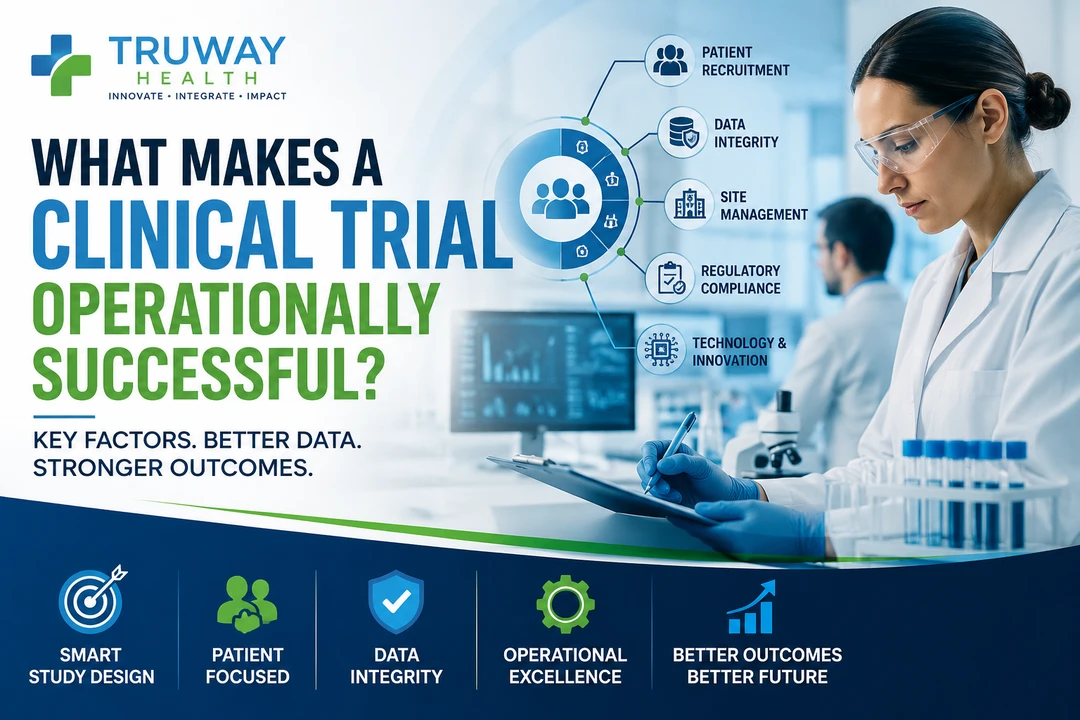
Clinical trials are the foundation of modern medical advancement. From breakthrough therapies to next-generation diagnostics, every innovation in healthcare depends on carefully managed research operations capable of producing reliable, ethical, and scientifically valid results.
But while scientific discovery often receives the spotlight, operational execution is what determines whether a clinical trial succeeds or fails.
A well-designed study can still struggle if enrollment lags, data quality suffers, logistics break down, or communication between stakeholders becomes fragmented. Operational success is not just about meeting timelines — it’s about creating a coordinated ecosystem that protects patients, ensures compliance, and generates trustworthy data.
At Truway Health, we believe operational excellence is one of the most important pillars of modern clinical research.
1. Strong Study Design Creates the Foundation
Every successful clinical trial begins with a clear and realistic protocol.
A study protocol must balance scientific rigor with practical execution. Overly complex inclusion criteria, excessive patient visits, or unrealistic data collection requirements can slow enrollment and increase participant dropout rates.
Operationally successful studies often prioritize:
- Clear objectives and endpoints
- Realistic patient eligibility criteria
- Efficient visit schedules
- Practical workflows for investigators and coordinators
- Early risk identification
The goal is to design studies that are both scientifically meaningful and operationally achievable.
2. Patient Recruitment and Retention Are Critical
One of the biggest challenges in clinical research remains patient enrollment.
Even highly promising studies can fail if enrollment targets are not met. Delays in recruitment increase costs, extend timelines, and may reduce statistical validity.
Successful trial operations depend on:
- Clear patient outreach strategies
- Diverse recruitment channels
- Transparent communication
- Simplified onboarding processes
- Participant engagement throughout the study lifecycle
Retention matters just as much as recruitment. Patients who feel informed, supported, and respected are more likely to remain active participants through study completion.
Modern research organizations are increasingly using:
- Digital engagement platforms
- Telehealth check-ins
- Mobile reminders
- Remote monitoring tools
to improve patient participation and reduce attrition.
3. Data Integrity Must Remain a Top Priority
Clinical research is only as valuable as the quality of its data.
Operationally successful trials establish strong systems for:
- Data collection
- Monitoring
- Validation
- Audit readiness
- Security and privacy protection
Accurate data management helps reduce protocol deviations, improves regulatory confidence, and supports faster analysis.
As research becomes increasingly decentralized and technology-driven, maintaining data integrity across multiple systems has become even more important.
Emerging technologies such as:
- electronic data capture (EDC),
- AI-assisted monitoring,
- predictive analytics,
- and blockchain-supported verification systems
are helping organizations strengthen transparency and traceability across clinical operations.
4. Site Coordination and Communication Matter
Clinical trials involve multiple stakeholders:
- investigators,
- sponsors,
- CROs,
- site coordinators,
- laboratories,
- logistics providers,
- and regulatory teams.
Without strong coordination, operational inefficiencies can quickly emerge.
Successful studies typically maintain:
- consistent communication channels,
- standardized reporting procedures,
- centralized documentation,
- and rapid issue escalation processes.
Operational clarity helps reduce delays, minimizes errors, and improves collaboration across study sites.
5. Regulatory Compliance Cannot Be an Afterthought
Compliance is embedded into every aspect of a successful clinical trial.
Research organizations must maintain alignment with:
- Good Clinical Practice (GCP),
- Institutional Review Board (IRB) requirements,
- FDA regulations,
- patient privacy laws,
- and study-specific protocols.
Operational success requires proactive compliance management rather than reactive correction.
This includes:
- proper documentation,
- staff training,
- audit preparedness,
- adverse event reporting,
- and standardized SOPs.
Organizations that build compliance into their operational culture are better positioned for long-term success and regulatory trust.
6. Technology Is Reshaping Clinical Trial Operations
The future of clinical research will be increasingly digital.
Modern trials are adopting technologies that improve:
- efficiency,
- patient accessibility,
- operational visibility,
- and real-time decision-making.
Some of the most important trends include:
- decentralized clinical trials (DCTs),
- wearable monitoring devices,
- AI-assisted analytics,
- cloud-based trial management systems,
- and remote patient engagement platforms.
These innovations have the potential to reduce operational friction while expanding access to broader patient populations.
However, technology alone is not enough. Successful implementation still depends on thoughtful workflows, trained personnel, and reliable infrastructure.
7. Operational Success Ultimately Supports Better Patient Outcomes
At its core, operational excellence in clinical research is about more than efficiency.
It is about helping bring safe, effective, and innovative healthcare solutions to patients faster and more reliably.
When clinical operations function effectively:
- researchers can generate higher-quality evidence,
- regulators can make more informed decisions,
- healthcare providers gain confidence in emerging therapies,
- and patients benefit from accelerated medical innovation.
The operational side of research may not always receive public attention, but it remains one of the most important drivers of successful healthcare advancement.
Final Thoughts
Clinical trial success depends on far more than scientific discovery alone. Strong operational infrastructure — including patient engagement, data integrity, regulatory readiness, logistics coordination, and modern technology integration — plays a defining role in determining research outcomes.
As healthcare continues evolving, organizations that invest in operational excellence will be better equipped to support scalable, ethical, and data-driven clinical innovation.
At Truway Health, we continue exploring how healthcare infrastructure, intelligent systems, and operational transparency can contribute to the future of clinical research and patient care.
Truway Health News & Insights

Moving from RN to Family Nurse Practitioner What You Need to Know
Experienced registered nurses often reach a point where strong bedside skills still leave a lingerin...

The Guidewire Is Not a Commodity: The Hidden Safety Architecture of Coronary Care
How precision engineering, clinical intelligence, and medical-device traceability are redefining exp...

Truth Social Suspends @truwayhealth Without Explanation: Truway Health Challenges Digital Censorship and Demands Accountability
October 9, 2026 | Truway Health News & Insights NEW YORK, NY — Truway Health, Inc. is formally chall...

The Stethoscope Standard: Rethinking the Value of U.S. M1 Through Medical Productive Capacity
Money ultimately derives much of its usefulness from confidence: confidence that a dollar can be exc...

Simple Steps for Seniors to Embrace Healthy and Joyful Living
For seniors seeking holistic wellness, healthy aging can feel harder than it should: the body change...

Healthcare Procurement Readiness: Building a More Resilient Clinical Supply Chain
Healthcare supply chains are often judged by a simple question: Did the product arrive? But for hosp...