
Anti-Needlestick Innovations: The Role of Smart Textiles in Clinical Safety
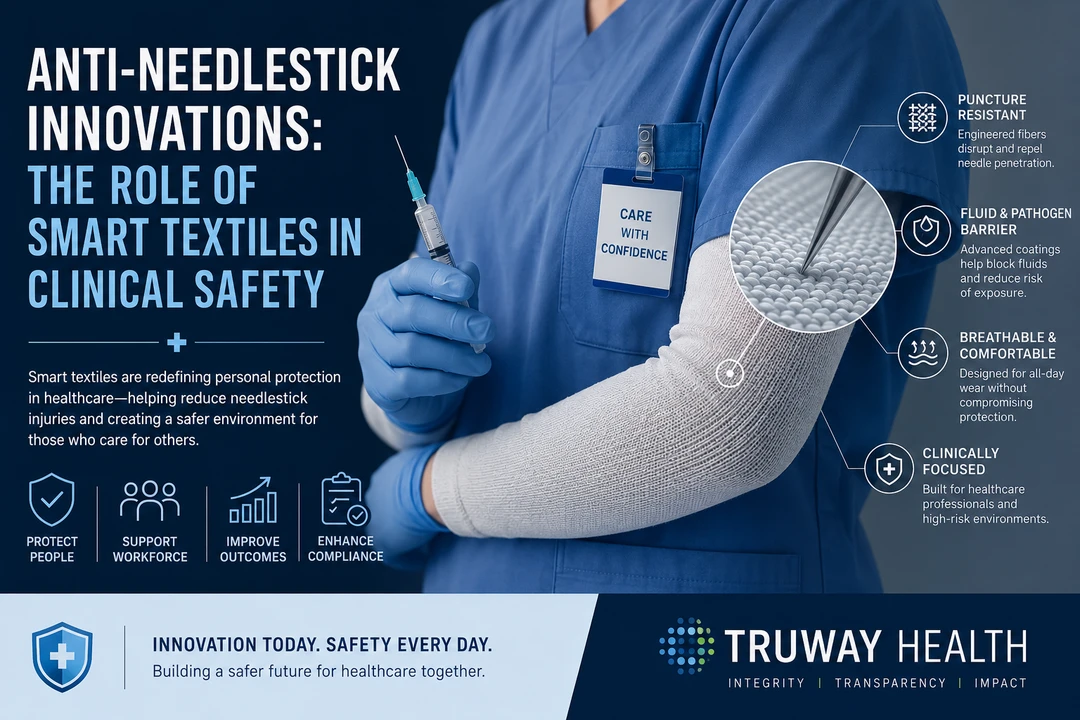
Needlestick injuries remain one of the most persistent occupational hazards in healthcare. Despite decades of progress—from safety-engineered sharps to improved disposal protocols—clinicians, nurses, technicians, and environmental services staff still face daily exposure risks. The next frontier in prevention is not just better devices—it’s what clinicians wear.
Smart textiles and advanced protective fabrics are emerging as a new layer of defense, designed to reduce or even prevent percutaneous injuries before they occur.
The Ongoing Risk Landscape
According to global occupational health data, hundreds of thousands of needlestick and sharps-related injuries occur annually across healthcare systems. These incidents carry risks of exposure to bloodborne pathogens such as:
- Hepatitis B (HBV)
- Hepatitis C (HCV)
- Human Immunodeficiency Virus (HIV)
Even with adherence to OSHA standards and the Needlestick Safety and Prevention Act, risk persists due to:
- High patient volume and workflow pressure
- Improper disposal or overfilled sharps containers
- Emergency scenarios requiring rapid intervention
- Human error under fatigue or stress
Traditional PPE—gloves, gowns, and scrubs—offers minimal resistance to needle penetration.
What Are Smart Textiles?
Smart textiles refer to engineered fabrics that provide enhanced functionality beyond conventional materials. In the context of needlestick prevention, these textiles are designed to:
- Resist puncture and penetration
- Disperse force across fibers
- Maintain flexibility and breathability
- Integrate antimicrobial or fluid-resistant properties
Unlike rigid protective gear, smart textile solutions are wearable, scalable, and workflow-compatible.
Core Technologies Behind Anti-Needlestick Fabrics
1. High-Performance Fiber Blends
Advanced fibers such as ultra-high-molecular-weight polyethylene (UHMWPE), aramids (e.g., Kevlar-type materials), and engineered polymers are woven into lightweight fabrics that can significantly reduce needle penetration force.
2. Layered Microstructure Design
Multi-layer textile architectures disperse the kinetic energy of a needle strike across a broader surface area, lowering the likelihood of skin breach.
3. Shear-Thickening Fluids (STFs)
Some smart textiles incorporate non-Newtonian fluids that remain flexible during normal movement but harden instantly under impact, creating a dynamic protective barrier.
4. Nano-Coatings & Surface Treatments
Hydrophobic and antimicrobial coatings enhance:
- Fluid repellency
- Pathogen resistance
- Durability under repeated sterilization cycles
Clinical Applications
Smart textile integration is already being explored in:
- Scrub sets and underscrubs for frontline staff
- Protective sleeves and gloves for phlebotomy and surgical teams
- Lab coats and isolation gowns in high-risk environments
- Emergency and field-response uniforms
These innovations are particularly relevant in:
- Emergency departments
- Operating rooms
- Infectious disease units
- Mobile and on-site diagnostic services
Benefits Beyond Protection
Smart textiles don’t just reduce injury risk—they also contribute to broader system improvements:
- Reduced occupational exposure incidents → lower reporting and treatment costs
- Improved staff confidence and retention in high-risk roles
- Enhanced compliance with workplace safety standards
- Potential insurance and liability reductions
In high-throughput clinical environments, even marginal reductions in injury rates can translate into meaningful operational and financial impact.
Limitations and Considerations
While promising, adoption is not without challenges:
- Cost vs. standard PPE: Advanced materials may carry higher upfront costs
- Regulatory classification: Determining whether smart textile PPE qualifies as a medical device or protective apparel
- Standardization gaps: Lack of universally accepted testing benchmarks for puncture resistance in clinical textiles
- Comfort and usability: Balancing protection with long-shift wearability
Healthcare systems must evaluate these factors alongside existing infection control protocols.
The Regulatory Outlook
As innovation accelerates, regulatory bodies—including the FDA and international standards organizations—are expected to:
- Develop clear testing frameworks for anti-penetration textiles
- Define performance thresholds for clinical use
- Align smart PPE with existing occupational safety requirements
Evidence generation—through clinical validation and real-world data—will be critical for widespread adoption.
The Future of Clinical Safety Wearables
Looking ahead, smart textiles may evolve into fully integrated safety platforms, combining:
- Embedded sensors to detect exposure events
- Real-time alert systems
- Biometric monitoring for clinician health and fatigue
- Connectivity with hospital safety and reporting systems
This convergence of materials science, wearable technology, and data infrastructure points toward a future where PPE is not just protective—but intelligent and responsive.
Truway Health Perspective
At Truway Health, we view smart textile innovation as a key component of next-generation healthcare infrastructure—where compliance, safety, and performance intersect. As clinical environments become more complex, protective systems must evolve accordingly.
Anti-needlestick textiles represent a shift from reactive safety measures to proactive risk mitigation embedded directly into the clinical workflow.
Bottom Line
Needlestick injuries are preventable—but only with layered, forward-thinking solutions. Smart textiles offer a compelling new defense: one that is wearable, adaptable, and aligned with the realities of modern healthcare delivery.
The question is no longer if these materials will enter clinical practice—but how quickly systems will adopt them.
Truway Health News & Insights

Moving from RN to Family Nurse Practitioner What You Need to Know
Experienced registered nurses often reach a point where strong bedside skills still leave a lingerin...

The Guidewire Is Not a Commodity: The Hidden Safety Architecture of Coronary Care
How precision engineering, clinical intelligence, and medical-device traceability are redefining exp...

Truth Social Suspends @truwayhealth Without Explanation: Truway Health Challenges Digital Censorship and Demands Accountability
October 9, 2026 | Truway Health News & Insights NEW YORK, NY — Truway Health, Inc. is formally chall...

The Stethoscope Standard: Rethinking the Value of U.S. M1 Through Medical Productive Capacity
Money ultimately derives much of its usefulness from confidence: confidence that a dollar can be exc...

Simple Steps for Seniors to Embrace Healthy and Joyful Living
For seniors seeking holistic wellness, healthy aging can feel harder than it should: the body change...

Healthcare Procurement Readiness: Building a More Resilient Clinical Supply Chain
Healthcare supply chains are often judged by a simple question: Did the product arrive? But for hosp...