
Pass-Through Chambers and Material Flow in Controlled Healthcare Environments
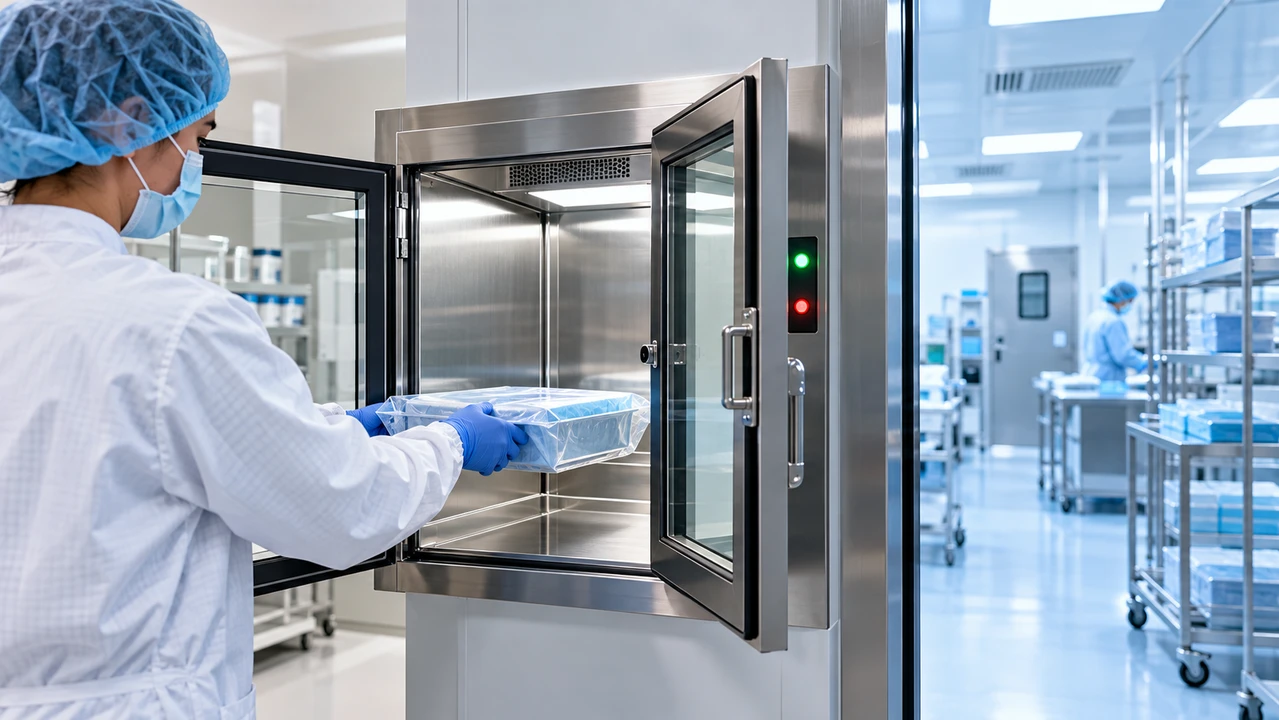
Controlled healthcare environments depend on more than clean surfaces and filtered air. The way materials move into, through, and out of a controlled space can have a direct effect on contamination control, workflow efficiency, product integrity, and staff safety.
One of the most practical tools for managing this movement is the pass-through chamber, sometimes called a pass box, transfer hatch, or material transfer chamber.
When designed and used correctly, pass-through systems help reduce unnecessary door openings, limit personnel traffic, and create a more disciplined separation between areas with different cleanliness or environmental requirements.
What Is a Pass-Through Chamber?
A pass-through chamber is an enclosed compartment installed between two rooms or controlled zones. Materials are placed into the chamber from one side and retrieved from the other.
The concept is simple, but the operational value can be significant.
Instead of opening a primary cleanroom, laboratory, sterile-processing, pharmacy, or controlled-storage door every time an item needs to be transferred, staff can move the item through a dedicated transfer interface.
Depending on the application, a pass-through chamber may include:
-
Interlocking doors
-
Mechanical or electronic access controls
-
Stainless-steel interiors
-
Flush-mounted surfaces
-
HEPA-filtered airflow
-
UV-C or other supplemental decontamination features
-
Pressure indicators
-
Timed door-release sequences
-
Alarm systems
-
Access logging
-
Custom shelving or trays
The appropriate configuration depends on the environment and the risk being managed.
Why Material Flow Matters
Material movement is one of the most overlooked sources of contamination risk in controlled environments.
Every package, instrument tray, supply container, cart, and piece of equipment entering a clean or restricted area represents a potential pathway for particles, microorganisms, moisture, packaging debris, or other contaminants.
At the same time, poorly designed material flow can create congestion, repeated handling, workflow delays, and unnecessary staff movement.
A well-designed facility therefore considers not only where people travel, but also where materials originate, how they are prepared, where they cross environmental boundaries, and where they are ultimately used or removed.
The objective is to create a predictable, controlled path.
The Principle of Clean-to-Less-Clean Separation
Controlled healthcare environments often rely on defined zones with different levels of environmental control.
A typical material path might move through several stages:
Receiving → inspection → unpacking → cleaning or wipe-down → controlled transfer → storage → clinical or production use
Each stage should reduce, rather than reintroduce, contamination risk.
Materials should generally move in a logical direction from less-controlled areas toward more-controlled areas. Waste, used equipment, and contaminated items should follow separate return pathways whenever practical.
This separation helps reduce cross-traffic between clean and potentially contaminated streams.
How Pass-Through Chambers Support Pressure Control
Controlled rooms frequently depend on pressure differentials to influence airflow.
A positively pressurized room is typically designed to push air outward when an opening occurs, helping protect the room from contaminants in surrounding spaces.
A negatively pressurized room works in the opposite direction, helping contain airborne hazards.
Frequent opening of full-sized doors can disrupt these pressure relationships.
Pass-through chambers reduce the need for personnel doors to be opened for routine material transfer. Interlocked pass-through doors can further reduce the chance that both sides of the chamber are open simultaneously.
This can help preserve the intended environmental separation between adjacent spaces.
A pass-through chamber, however, should not be treated as a substitute for proper HVAC design, airflow qualification, pressure monitoring, or procedural controls.
Static vs. Dynamic Pass-Through Chambers
Pass-through chambers can generally be divided into two broad categories.
Static Pass-Through Chambers
A static pass-through provides a physical transfer barrier without independently conditioned airflow.
These systems can work well when the primary need is controlled separation between rooms rather than active air treatment.
Common applications may include:
-
General cleanroom material transfer
-
Sterile storage areas
-
Laboratories
-
Controlled manufacturing spaces
-
Pharmacy support rooms
Dynamic Pass-Through Chambers
Dynamic systems incorporate active airflow, often using HEPA-filtered air.
These chambers may be selected when tighter particulate control or environmental recovery is required.
A dynamic pass-through can potentially maintain a cleaner internal environment during transfer, although its performance depends heavily on airflow design, filter integrity, maintenance, and validation.
The appropriate system should be selected according to the actual process risk rather than simply choosing the most complex configuration available.
Interlocking Doors
Door interlocks are one of the most important pass-through features in higher-control environments.
An interlock prevents one door from opening while the opposite door is already open.
This creates an operational barrier between adjacent spaces and reduces direct airflow exchange.
Interlocks may be:
-
Mechanical
-
Electronic
-
Electromagnetic
-
Programmable
Advanced systems may also use indicator lights, audible alarms, timers, or access-control credentials.
The operating procedure should clearly define when material may be introduced, whether a dwell or cleaning period is required, and when the receiving-side door can be opened.
Material Preparation Before Transfer
A pass-through chamber does not automatically make an item clean.
Materials should be appropriately prepared before entering a higher-control zone.
Preparation may include:
-
Removing external shipping cartons.
-
Inspecting packaging for damage.
-
Removing unnecessary paper or corrugated materials.
-
Wiping external surfaces with an approved cleaning or disinfecting agent where required.
-
Allowing surfaces to remain wet for the applicable disinfectant contact time.
-
Transferring items to clean secondary containers when appropriate.
-
Documenting lot, serial, or inventory information before entry.
The exact sequence should be established by the facility's infection-control, quality, pharmacy, sterile-processing, laboratory, or environmental-control procedures.
Designing One-Way Material Flow
One-way movement is often preferable in controlled environments.
A facility might designate one pass-through for incoming clean materials and another pathway for outgoing waste, used instruments, samples, or returned equipment.
This helps reduce the chance that clean supplies will share the same transfer surface with contaminated materials.
Where separate pathways are not feasible, detailed cleaning and turnover procedures become even more important.
Design teams should map material movement before equipment is installed.
Questions worth asking include:
-
Where do incoming products arrive?
-
Where is secondary packaging removed?
-
Where are materials disinfected?
-
Where are supplies staged?
-
Can incoming and outgoing material cross?
-
Are clean and used instruments ever handled in the same location?
-
Does personnel traffic intersect with material traffic?
-
Are emergency or high-volume workflows considered?
The answers frequently reveal workflow problems before construction begins.
Surface Design Matters
Pass-through chambers should be designed for easy cleaning.
Features commonly preferred in controlled environments include:
-
Smooth interior surfaces
-
Rounded or sealed corners
-
Minimal seams
-
Flush hardware
-
Corrosion-resistant materials
-
Non-shedding construction
-
Chemical resistance
-
Accessible surfaces for routine cleaning
Stainless steel is commonly used because of its durability and cleanability, but material selection should be matched to the chemicals and cleaning procedures used by the facility.
Poorly designed hinges, exposed fasteners, deep seams, damaged gaskets, or inaccessible corners can create areas that are difficult to clean effectively.
Pass-Through Chambers in Sterile Processing
Sterile-processing departments depend heavily on disciplined separation between contaminated, clean, preparation, sterilization, and sterile-storage functions.
Pass-through systems can help create defined transfer points between departments or processing stages.
For example, sterilized supplies may be transferred into a controlled storage area without requiring personnel to enter from the processing side.
However, workflow design must carefully avoid reversing the intended direction of instrument movement or allowing contaminated devices to enter clean zones.
Physical equipment must always be supported by clear procedural controls.
Pharmacy and Compounding Environments
Material transfer is particularly important in pharmacy cleanroom environments.
Supplies, components, drugs, syringes, packaging, and other materials may need to move from an uncontrolled area into progressively cleaner spaces.
Pass-through chambers can support this movement while reducing unnecessary traffic through controlled doors.
The chamber's configuration, placement, cleaning procedures, and operating sequence should be aligned with the applicable facility policies and regulatory requirements governing pharmaceutical preparation.
Laboratories and Research Facilities
Clinical, diagnostic, and research laboratories also benefit from controlled transfer points.
Depending on the laboratory, the goal may be to protect:
-
Samples
-
Personnel
-
Research materials
-
Sensitive instrumentation
-
Controlled environments
-
Adjacent areas
For some laboratories, containment is more important than cleanliness. In others, protection of a high-purity experimental space may be the priority.
This is why pass-through systems must be selected according to the actual hazard model.
Pass-Through Chambers Are Part of a Larger System
A pass-through chamber should never be evaluated in isolation.
Its effectiveness depends on the surrounding infrastructure, including:
-
HVAC design
-
Room pressure relationships
-
Air-change rates
-
HEPA filtration
-
Gowning practices
-
Cleaning procedures
-
Surface materials
-
Personnel flow
-
Material-flow policies
-
Environmental monitoring
-
Preventive maintenance
-
Staff training
A sophisticated pass-through system installed into a poorly designed workflow will not solve fundamental contamination-control problems.
The best results come from treating the transfer chamber as one component of an integrated controlled-environment strategy.
Common Material-Flow Mistakes
Facilities can reduce risk by watching for several recurring problems.
Bringing Shipping Cartons Into Controlled Areas
Corrugated cardboard can generate particles and may accumulate contamination during warehousing and transportation.
Where procedures require it, outer packaging should be removed before materials reach higher-control zones.
Using the Same Path for Clean and Dirty Materials
Shared pathways increase the chance of cross-contamination.
Separate routes should be considered wherever facility design allows.
Overloading the Pass-Through
Crowding can obstruct airflow in dynamic units and make proper surface cleaning difficult.
Transfer loads should remain within the equipment's intended capacity.
Opening Both Doors Simultaneously
Unless specifically designed for simultaneous access, this can compromise environmental separation.
Interlocks and staff training help prevent this behavior.
Treating the Chamber as Storage
A pass-through should normally function as a transfer point rather than long-term inventory space.
Leaving items inside can interfere with cleaning, airflow, and operational availability.
Ignoring Cleaning Frequency
The chamber itself becomes part of the controlled environment and should be incorporated into routine cleaning and inspection schedules.
Validation and Ongoing Maintenance
Pass-through chambers should be included in the facility's preventive-maintenance program.
Depending on the equipment and environment, activities may include:
-
Door-interlock testing
-
Gasket inspection
-
Surface-condition inspection
-
Airflow verification
-
HEPA filter testing
-
Pressure testing
-
Alarm verification
-
Electrical inspection
-
Cleaning validation
-
Preventive maintenance documentation
Dynamic units require particular attention because airflow and filtration performance can degrade over time.
Documenting maintenance and qualification activities helps demonstrate that the chamber continues to perform as intended.
Technology Is Improving Material Transfer
Pass-through systems are increasingly being integrated with digital facility controls.
Possible features include:
-
Badge-controlled access
-
Electronic transfer logs
-
Barcode scanning
-
RFID tracking
-
Remote alarm monitoring
-
Automated dwell timers
-
Environmental sensors
-
Building-management-system integration
These capabilities can strengthen traceability, especially in environments where material identity and chain of custody are important.
A future controlled environment may not simply record that a door opened—it may automatically document what item moved, when it moved, who authorized the transfer, and the environmental conditions at the time.
Designing Around the Workflow
The most important question when selecting a pass-through chamber is not simply, "What size chamber do we need?"
It is:
What workflow are we trying to control?
The answer determines nearly everything else.
Consider:
-
Material dimensions and weight
-
Transfer frequency
-
Cleanliness requirements
-
Pressure relationships
-
Personnel workflows
-
Cleaning chemicals
-
Required filtration
-
Security needs
-
Traceability requirements
-
Future capacity
-
Facility layout
Designing around the actual workflow helps avoid an expensive situation in which technically capable equipment does not fit the facility's real operating needs.
The Bottom Line
Pass-through chambers are deceptively simple pieces of controlled-environment infrastructure.
Their real value comes from how they support a larger material-control strategy.
When combined with thoughtful zoning, pressure management, proper packaging removal, surface disinfection, separate clean and contaminated pathways, environmental monitoring, and disciplined operating procedures, pass-through systems can help healthcare organizations create safer and more efficient controlled environments.
The objective is not simply to move an item from one room to another.
It is to move that item without unnecessarily compromising the environment on either side of the wall.
For hospitals, pharmacies, laboratories, sterile-processing departments, medical-device facilities, and other controlled healthcare environments, that distinction can be fundamental to effective contamination control and reliable operations.
About Truway Health
Truway Health supports healthcare organizations with medical equipment, clinical technology, controlled-environment solutions, diagnostic systems, and specialized healthcare supply-chain requirements. Our focus is on connecting equipment selection with the broader operational workflow required for safe, efficient, and scalable healthcare delivery.
Truway Health News & Insights

Healthcare Equipment Interoperability: Understanding DICOM, HL7, and FHIR
Truway Health | Medical Technology, Digital Infrastructure & Healthcare Innovation Modern medical eq...

Medical-Grade Stainless Steel: Comparing 304 and 316 for Healthcare Equipment
Truway Health | Medical Equipment, Materials Engineering & Healthcare Procurement Not all stainless...

Winter Respiratory Season Preparedness: Essential Supplies for Caregivers and Clinics
Published October 18, 2026 | Truway Health News & Insights When respiratory illnesses rise, preparat...

What Families Should Know When a Loved One Enters Hospice Care
For families with a terminally ill loved one, the start of hospice can land like two realities at on...

Moving from RN to Family Nurse Practitioner What You Need to Know
Experienced registered nurses often reach a point where strong bedside skills still leave a lingerin...

The Guidewire Is Not a Commodity: The Hidden Safety Architecture of Coronary Care
How precision engineering, clinical intelligence, and medical-device traceability are redefining exp...