
How to Protect Your Mental Health from Social Media.

Social media has become an integral part of our daily lives, connecting us with friends, family, and the world at large. However, the constant stream of information and constant connection can also come with its own set of dangers to our mental health. From cyberbullying to social comparison and FOMO, social media can be a breeding ground for negative emotions and mental health issues.
One way to protect your mental health from social media dangers is to set boundaries and limit your use of social media. This can include setting specific times of day to check your accounts, setting time limits for social media use, and limiting the number of accounts you follow. Additionally, it can be helpful to take regular breaks from social media altogether, such as going on a social media detox or taking a "digital Sabbath" one day a week.
Another way to protect your mental health is to be mindful of the types of content you engage with on social media. It can be easy to get caught up in the constant stream of information and to spend hours scrolling through negative or triggering content. Instead, make an effort to seek out positive and uplifting content that aligns with your values and interests. Additionally, consider unfollowing or muting accounts that consistently post negative or triggering content.
It's also important to be aware of the impact of social comparison on your mental health. Social media can be a breeding ground for comparing ourselves to others, and it's easy to fall into the trap of thinking that everyone else's life is better or more exciting than our own. To combat this, try to focus on your own journey and accomplishments, rather than constantly comparing yourself to others. Additionally, remind yourself that social media only shows a curated version of someone's life and it may not be an accurate representation of reality.
Lastly, it's important to have a support system in place to help protect your mental health from social media dangers. This can include talking to friends and family about your concerns, seeking out professional help if needed, and joining online communities of people who understand what you're going through.
In conclusion, social media can be a breeding ground for negative emotions and mental health issues, but it is possible to protect your mental health by setting boundaries, being mindful of the types of content you engage with, practicing self-compassion and having a support system in place. It's important to take responsibility for your own well-being and to make the necessary changes to ensure you're using social media in a way that positively impacts your life.
Truway Health News & Insights

3D Ultrasound vs. Traditional Ultrasound: What Is the Difference?
Introduction Ultrasound is one of the most widely used medical imaging technologies. It uses high-fr...

Autumn Healthcare Tips & Tricks: A Simple Guide to Staying Well This Season
As the leaves change, so do our routines. Autumn brings cooler temperatures, shorter days, changing...

TruWay Health Announces OMNIPHYS: A 20-Year Multimodal Physiologic State Intelligence Research Program
PRESS RELEASE TruWay Health Announces OMNIPHYS: A 20-Year Multimodal Physiologic State Intellige...

Truway Health Announces ClinicalTrials.gov Registration of 50-Year Prospective Study Examining “Clinical Time” and Temporal Dynamics in Patient Health
PRESS RELEASE Truway Health Announces ClinicalTrials.gov Registration of 50-Year Prospective...
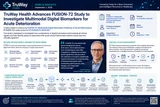
TruWay Health Advances FUSION-72 Study to Investigate Multimodal Digital Biomarkers for Acute Deterioration
TruWay Health Advances FUSION-72 Study to Investigate Multimodal Digital Biomarkers for Acute Deteri...

Truway Health Releases TRU-OMNIBODY Whole-Body Digital Twin and Physiologic Resilience Study
FOR IMMEDIATE RELEASE Truway Health Releases TRU-OMNIBODY Whole-Body Digital Twin and Physiologic Re...