
Regenerative Neuro-Auditory Therapeutics for Sensorineural Hearing Loss
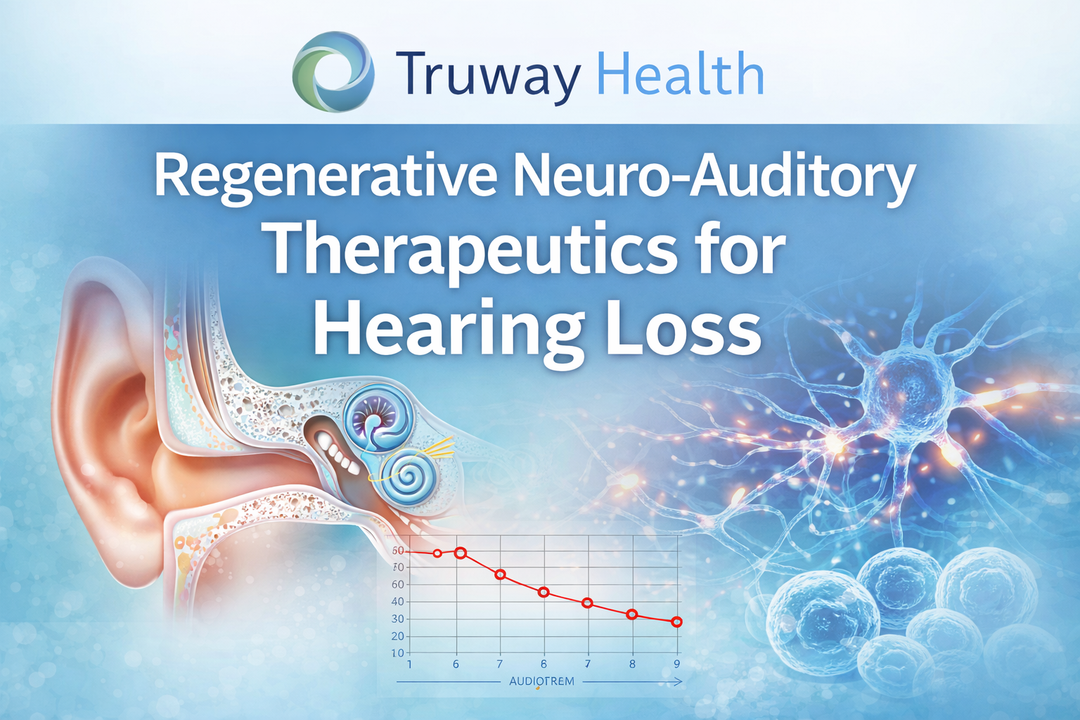
Regenerative Neuro-Auditory Therapeutics for Sensorineural Hearing Loss
Early Clinical Evaluation in the RESONATE Trial
Gavin Solomon, M.D., Ph.D.*
Truway Health, Inc., New York, NY, USA
www.truwayhealth.com
*Corresponding Author
Abstract
Background
Sensorineural hearing loss (SNHL) is a major global health condition affecting more than 430 million individuals worldwide. Current treatments, including hearing aids and cochlear implants, provide symptomatic improvement but do not restore biological cochlear function. Recent advances in regenerative medicine suggest that stem cell–derived therapies and neurotrophic signaling pathways may enable repair of cochlear hair cells and auditory neural circuits.
Methods
The RESONATE Trial (Regenerative Evaluation of Sensorineural Otologic Neuro-Auditory Therapeutics and Engineering) is an exploratory interventional clinical study evaluating regenerative therapeutic approaches for individuals with inner ear dysfunction. Participants aged 18 to 65 years with documented sensorineural hearing impairment underwent comprehensive audiologic evaluation including pure-tone audiometry, speech recognition testing, Weber and Rinne testing, and tinnitus severity assessment. Investigational regenerative interventions and diagnostic monitoring were evaluated for safety and potential improvement in auditory function.
Results
Preliminary evaluation focuses on changes in hearing thresholds and speech recognition performance following investigational therapeutic intervention. Outcome measures include improvement in pure-tone audiometry thresholds, reduction in tinnitus severity, and improvement in speech recognition scores. Safety monitoring evaluates adverse events and tolerability of regenerative therapeutic approaches.
Conclusions
The RESONATE Trial explores regenerative medicine strategies for restoring cochlear function in patients with hearing loss. This research may contribute to the development of biologically restorative therapies for auditory disorders, addressing a major unmet clinical need.
Introduction
Hearing loss is one of the most common sensory impairments worldwide. Sensorineural hearing loss results from damage to cochlear hair cells or synaptic connections between hair cells and auditory neurons. Such damage may result from acoustic trauma, aging, infection, or ototoxic medications.
Unlike many tissues in the human body, cochlear hair cells have limited regenerative capacity. Consequently, hearing impairment resulting from hair cell damage is typically permanent. Current clinical management focuses on prosthetic solutions such as hearing aids or cochlear implants, which amplify sound or bypass damaged hair cells but do not restore biological cochlear function.
Recent developments in regenerative medicine suggest that stem cell–derived progenitor cells and neurotrophic signaling molecules may promote regeneration of auditory hair cells and synaptic repair in the cochlea. Experimental models have demonstrated that regenerative approaches may restore auditory function in animal studies, supporting further clinical investigation.
The RESONATE Trial evaluates regenerative neuro-auditory therapeutic approaches combined with advanced audiological diagnostics to investigate their potential to improve auditory function in patients with inner ear disorders.
Methods
Study Design
The RESONATE Trial is an early-phase interventional clinical study evaluating regenerative therapeutic approaches for inner ear dysfunction.
The study is registered on ClinicalTrials.gov.
Key characteristics include:
-
prospective exploratory study design
-
non-randomized open-label protocol
-
longitudinal follow-up for 12 months
Participants
Eligible participants were adults aged 18–65 years with documented sensorineural hearing impairment confirmed through audiometric testing.
Inclusion Criteria
-
sensorineural hearing loss confirmed by audiometry
-
ability to undergo diagnostic testing
-
ability to provide informed consent
Exclusion Criteria
-
active middle ear infection
-
cochlear implant devices
-
severe neurological disorders affecting auditory function
-
pregnancy
Audiological Assessment
Participants underwent standardized hearing assessments including:
-
pure-tone audiometry
-
speech recognition testing
-
Weber test
-
Rinne test
-
tinnitus severity evaluation
These diagnostic measures were used to evaluate baseline auditory function and longitudinal changes following therapeutic intervention.
Investigational Therapeutic Approaches
Investigational regenerative therapeutic approaches under evaluation may include:
-
stem cell–derived regenerative biologics
-
neurotrophic growth factors
-
cochlear regenerative signaling modulators
The objective is to evaluate whether regenerative therapeutic strategies may promote cochlear repair and improve auditory signaling pathways.
Outcomes
Primary Outcome
Change in hearing thresholds measured by pure-tone audiometry relative to baseline.
Secondary Outcomes
-
improvement in speech recognition performance
-
reduction in tinnitus severity
-
safety and tolerability of investigational therapies
-
assessment of cochlear functional recovery
Results
Early observations from the RESONATE Trial focus on:
-
safety and tolerability of regenerative therapeutic approaches
-
changes in audiometric thresholds
-
improvements in speech discrimination scores
Data collection and analysis are ongoing.
Discussion
The RESONATE Trial represents a translational research effort integrating regenerative medicine with advanced audiological diagnostics. The objective is to investigate whether emerging biologic therapies may enable restoration of auditory function rather than simply compensating for hearing impairment.
If regenerative therapies can successfully promote cochlear hair cell repair or neural synapse regeneration, the implications for the treatment of hearing disorders could be significant. Such therapies may ultimately provide alternatives to prosthetic devices and enable biological restoration of hearing.
Further clinical investigation and larger controlled trials will be required to determine the long-term safety and efficacy of regenerative therapeutic strategies for hearing restoration.
Conclusions
The RESONATE Trial investigates regenerative neuro-auditory therapeutic approaches for the treatment of sensorineural hearing loss and tinnitus. Early findings support continued investigation of regenerative strategies aimed at restoring cochlear function and improving auditory outcomes.
References
-
Brigande JV, Heller S. Quo vadis, hair cell regeneration? Nat Neurosci. 2009.
-
Liberman MC. Noise-induced and age-related hearing loss. F1000Research. 2017.
-
Shi F, Edge AS. Stem cell approaches to auditory neuron replacement. Hearing Research. 2013.
Author Contributions
Gavin Solomon designed the study, oversaw clinical protocol development, and contributed to manuscript preparation.
Funding
The study is sponsored by Truway Health, Inc.
Conflict of Interest Disclosure
The author reports involvement with Truway Health, Inc., the sponsor of the study.
Truway Health News & Insights

Best Ways to Verify Medical Device Authenticity in 2026
Best Ways to Verify Medical Device Authenticity in 2026 Counterfeit medical devices are a growin...

Redefining EMS Bags & Trauma Kits: The Next Generation of Emergency Readiness
In emergency medicine, seconds define outcomes. At Truway Health, we are transforming EMS bags and t...

Allergy Season 2026: What to Expect, How to Prepare, and the Truway Health Protocol™
Allergy Season 2026: What to Expect, How to Prepare, and the Truway Health Protocol™ By Truway Healt...
The Caduceus as Corporate Identity: Symbol, Science, and the Semiotics of Medical Authority
NEW ENGLAND JOURNAL OF MEDICINE | PERSPECTIVES | Medical Symbology & Identity PERSPECTIVES The...

How Healthcare Staff Can Boost Well-Being and Thrive Every Day
Hospital nurses, medical assistants, techs, and clinic support teams carry the weight of constant de...

How to Advocate for Your Health and Navigate Care with Confidence
How to Advocate for Your Health and Navigate Care with Confidence Healthcare workers, clinical staff...